A garden deer fence in San Diego County is a height and mesh problem, not a 6-foot privacy fence with extra pickets. Mule deer in Alpine, Ramona, and Julian can clear a standard 6-foot line when a garden is the food source. Fence Pros San Diego is a referral service. We do not publish per-foot deer-fence rates, and we do not install the fence. An independent contractor measures the line, names the mesh and posts, and confirms County zoning and permit path for an 8-foot run.
How tall a garden deer fence needs to be
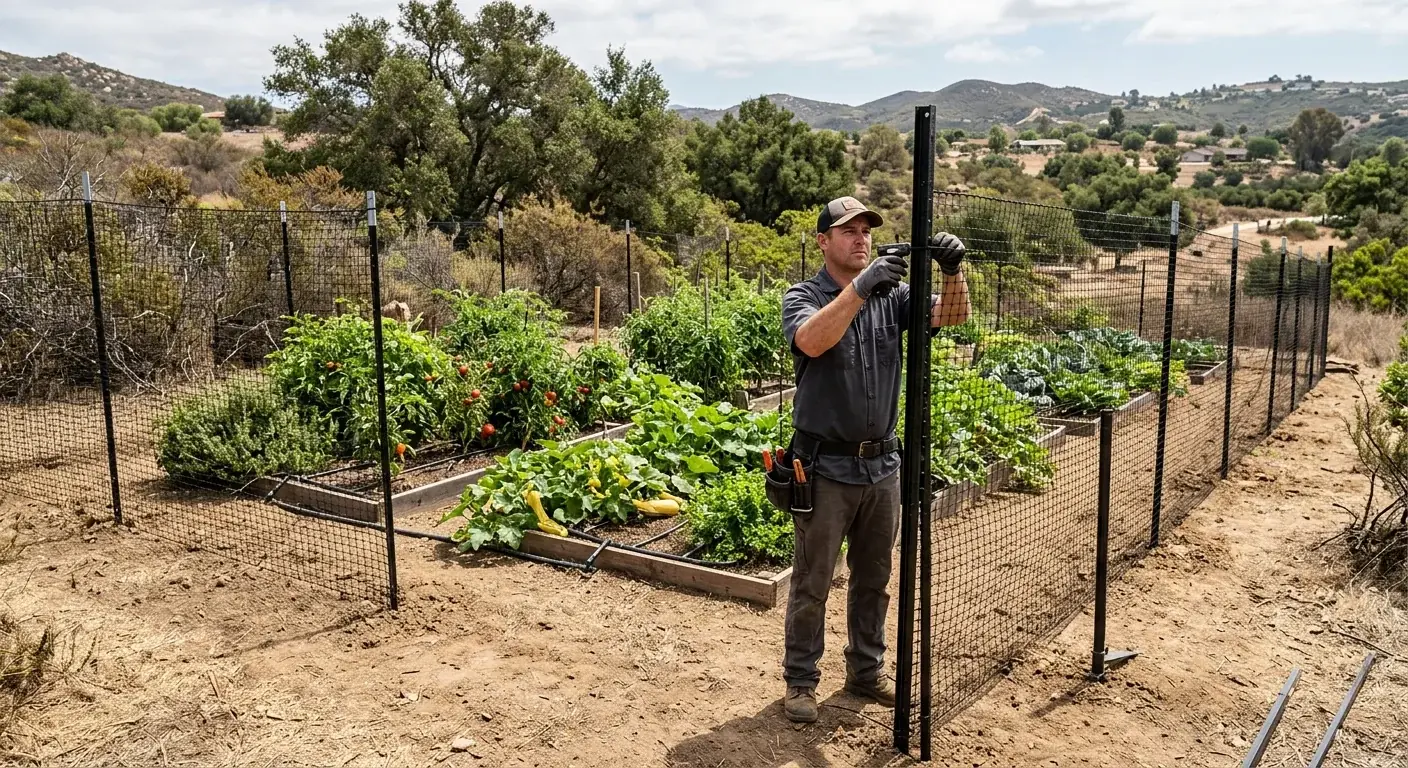
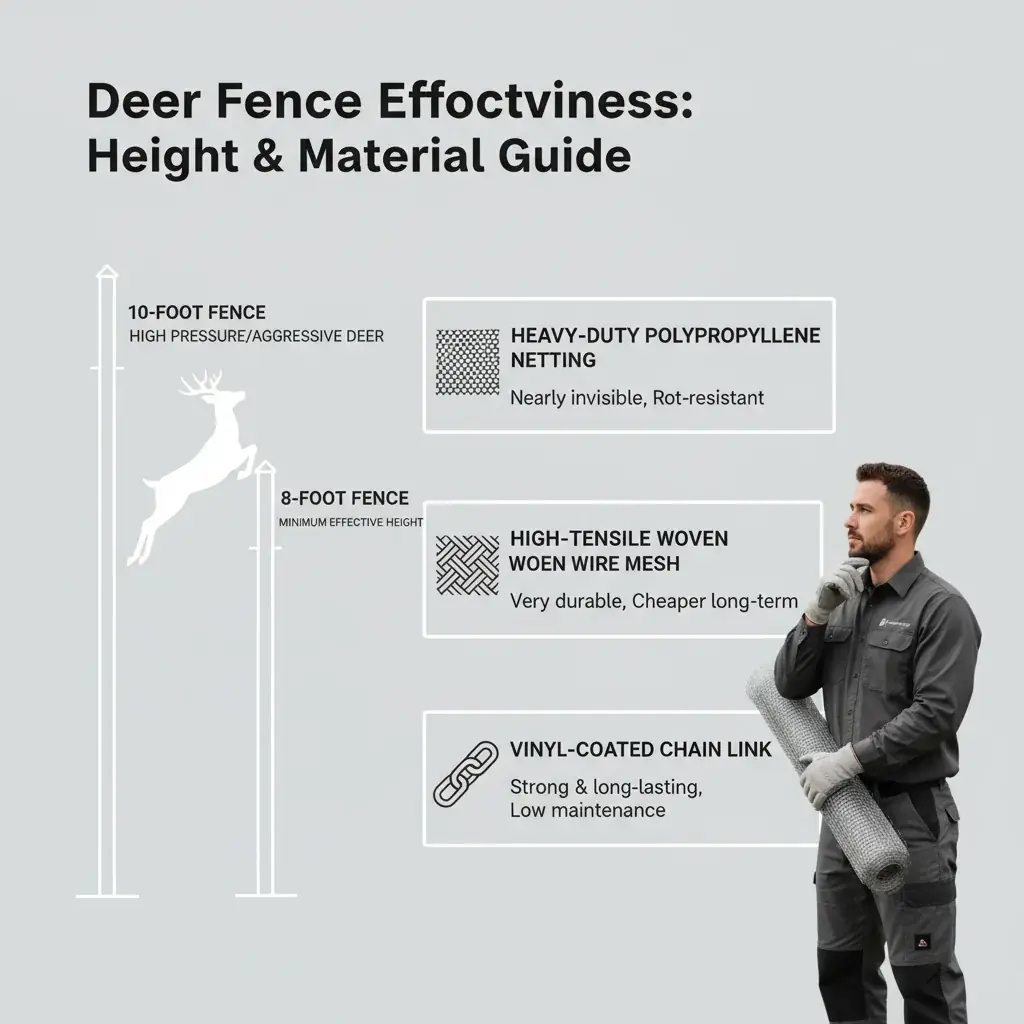
A 6-foot privacy fence is built for people and pets. It is not a deer specification. When mule deer are feeding on vegetables, fruit trees, or new landscaping, garden fences in this county are commonly discussed at about 8 feet, and sometimes taller where pressure is high. That is a design question for the property, not a promise that 8 feet stops every animal.
Height is only half of the jump decision. A visually solid fence is easier for a deer to judge. Mesh or net that hides the landing can add hesitation even when the top rail is in the same height band. Ask the contractor to walk the garden edge and say whether they are proposing a see-through mesh, a solid base with a mesh top, or an extension on an existing privacy line.
Confirm height against the jurisdiction that actually governs the parcel. Alpine, Ramona, and Julian are unincorporated. County of San Diego Planning and Development Services form PDS 070 (rev. 01/01/2023) says a building permit is required for any fence except fences and freestanding masonry walls not exceeding 6 feet in height that also comply with County Zoning Ordinance fencing rules, plus a narrow exception for certain open security fences up to 8 feet with barbed or razor wire in the top 2 feet. An 8-foot garden mesh fence is not that barbed-wire exception.
The same PDS 070 excerpt from Zoning Ordinance section 6708 lists 42 inches in a front or exterior side yard and 72 inches in a rear or interior side yard, with a different rule in the main-building area. An 8-foot garden enclosure can therefore be a zoning conversation, not only a building-permit conversation. Get that in writing from the County before you order posts.
Mesh, posts, and the ground line
Two product families show up on garden jobs: high-tensile woven wire, and heavy polypropylene or nylon deer netting on posts. Mesh needs openings small enough that a fawn cannot walk through. Netting is lighter and less visible. Neither name is a complete spec. Ask for gauge or product line, post spacing, post material, and how the fence meets the ground.
Deer push under a slack bottom. Ask whether the bid includes a buried skirt, a bottom tension wire, or another ground closure. That line item is as important as the top height.
Do not treat coastal rust talk as the main failure mode inland. Ramona and Alpine see wind, UV, and dry heat. Ask how the proposed mesh and posts are finished for that exposure. Chain link can be part of a taller system, but a standard 6-foot chain-link yard fence is still a 6-foot fence.
Fence Pros San Diego does not sell mesh. Compare two written assemblies, not a catalog photo.
Why Alpine, Ramona, and Julian show up in this question
These communities sit against canyon, open space, and agricultural edges. Gardens and young trees are easy forage in dry months. Larger lots mean more linear footage and more grade. That is why a deer fence here is often a rural or semi-rural enclosure, not a city side-yard infill.
A physical barrier is the long-term method. Sprays and scare devices need reapplication. This page does not rank brands of repellent.
If you are also designing a decorative garden screen, keep that job separate from the deer height. Our garden fence ideas in San Diego page is the style URL. This page is the containment URL.
Extending an existing fence instead of rebuilding it
You do not always tear out a 6-foot wood, chain-link, or block line. Contractors often add posts and mesh above or just inside the existing run to reach deer height. That only works if the existing posts can take the extra wind load. Ask for a yes or no on that, in writing, after they see the posts.
On a larger rural property, a farm or livestock perimeter and a garden deer enclosure are different scopes. See farm fence in San Diego for the livestock conversation. Do not leave a gap where the two systems meet.
Frequently asked questions
How tall does a deer fence need to be to protect a garden?
Plan around mule deer that can clear a 6-foot privacy fence when food is on the other side. Garden deer fences in this county are commonly discussed at about 8 feet. That height still has to fit County zoning and permit rules on an unincorporated parcel. It is not a guarantee against every jump.
What is the best material for a deer fence in San Diego County?
There is no single best product in the claims ledger. High-tensile woven wire and heavy deer netting are the two classes to compare. Ask about openings, posts, ground closure, and wind. Inland heat in Ramona and Alpine is a UV and post question, not a salt-air question.
How much does a deer fence cost per foot in San Diego?
Fence Pros San Diego does not publish per-foot deer-fence rates. There is no verified local invoice set behind the old dollar bands on this URL. A written quote should name height, mesh, posts, ground closure, gates, and whether the job is a new line or an extension on existing posts.
Do I need a permit for a deer fence in San Diego County?
On unincorporated land, do not use a “under 6 feet, no permit” shortcut. PDS 070 requires a building permit except for fences not exceeding 6 feet that also meet zoning, plus a narrow open-fence security exception that is not a garden mesh spec. An 8-foot garden fence is often both a permit and a 72-inch rear-yard zoning issue. Confirm the parcel with County PDS. Incorporated cities have their own desks.
Can I extend my existing fence to keep deer out?
Often yes, if existing posts can take the extra height and wind. The contractor should say so after inspecting those posts. A privacy fence line can be the base. It is not automatically strong enough.
How long does a deer fence last?
There is no verified lifespan table for wire versus polypropylene netting in the approved claims ledger. Ask the product literature and the contractor how UV, wind, and ground contact are handled. Do not treat a blog year-range as a warranty.
When to call us
Call when you need a garden or orchard enclosure in deer country, or an extension on an existing fence. Fence Pros San Diego matches you with an independent fence professional. You contract and pay that professional directly. Verify any C-13 license at cslb.ca.gov. Call (858) 400-4906.