Ramona is unincorporated, which is the first thing that should shape a driveway gate plan here. There’s no City of Ramona building department. The authority over permits, setbacks, and land use on a Ramona parcel is the County of San Diego’s Planning and Development Services, and that single fact changes who you call before you order a gate.
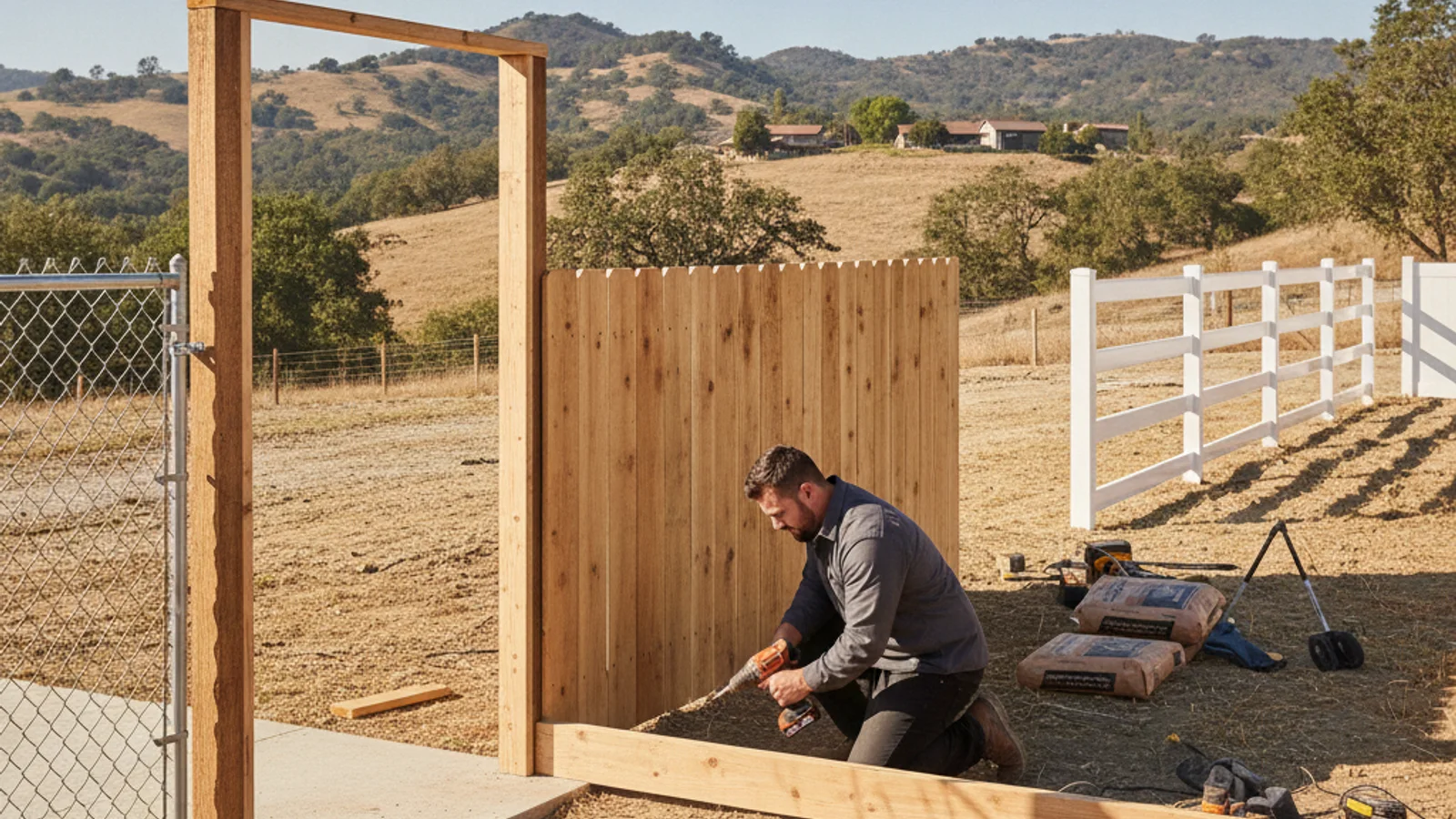
Start with the county, not a city hall
Because Ramona has no city government of its own, questions that would go to a city building department elsewhere in the county go to the County of San Diego Planning and Development Services instead. That includes any question about setback distance from the road, height limits, and whether your specific gate location needs a permit at all.
This guide can’t tell you the exact current setback or height figure that applies to your parcel. San Diego County’s unincorporated fence and gate rules haven’t been independently verified for publication here, and a guessed number is worse than no number. Call County PDS directly, or check their current published standards, before you finalize a design. Ask specifically whether your parcel’s zoning designation changes anything about a gate at the road frontage.
If your property is part of a larger parcel split or has an easement serving a neighboring property, mention that up front. Shared access on rural Ramona land is common enough that the county will want to know if your gate crosses or sits near an easement line.
Plan for the length of a rural private drive
Many Ramona properties sit well back from the road, with private drives running several hundred feet or more before reaching the house. That distance changes almost every practical decision about the gate itself.
Start by walking the full length of the drive and noting where the terrain changes. A grade change partway up the drive, a narrow pinch point, or a low spot that collects water after rain all affect where the gate can realistically sit and how it should be built. Ask the contractor to walk this with you rather than relying on a satellite image, since aerial views miss surface detail that matters for footing and drainage.
Decide, too, how wide the entry needs to be. A rural entry gate serving farm equipment, trailers, or larger vehicles typically needs a wider opening than a standard residential driveway gate, and a double-panel swing gate or a wide slider is common on this kind of property. Get the actual equipment or vehicle widths you need to accommodate before the gate width is finalized.
Account for backcountry power reliability
Ramona sits in San Diego’s backcountry, where power service can be less consistent than in denser parts of the county, particularly during high-wind conditions when utilities may proactively shut off power in fire-risk areas. That reality should shape how you power an automated gate here.
Ask the contractor to walk through a solar-powered opener as a real option, not an afterthought, since it keeps the gate functioning independent of grid power. If you prefer a hardwired system, ask what backup exists for an outage, such as a battery backup in the control box and a reliable manual release so you or emergency responders can open the gate by hand without power. For a rural property, a manual release that actually works when needed matters more than it does on a short urban driveway with reliable grid power nearby.
Also ask how the opener and control box are protected from dust, insects, and rodents, which are more of a factor in a rural setting than in a dense residential neighborhood.
Match the gate style to a working rural entry
A ranch-style tubular steel or pipe gate is a common, practical choice for a rural Ramona entry, both for its cost relative to ornamental designs and for how well it holds up against livestock, equipment, and general wear at a working property line. Ask the bidder whether the proposed gate width and panel spacing suit any animals that may be near the entry.
If the property includes livestock containment beyond the driveway gate itself, that’s a related but separate project. Our farm fence guide and horse property fence guide cover planning for corrals, runs, and perimeter fencing on rural San Diego County parcels, and the fence installation and gate installation service pages cover the base scope of work.
Plan for how the gate is used day to day
A rural Ramona entry usually sees a mix of traffic that a suburban driveway gate never has to account for: your own vehicles, delivery trucks, farm or feed deliveries, guests who don’t know the property, and sometimes contractors or agricultural workers arriving on a schedule you don’t fully control. Think through who needs access before you settle on a control method.
A keypad with individually assigned codes lets you give a code to a regular visitor, such as a feed delivery service, without handing over a physical remote, and lets you deactivate that code later without changing everyone else’s access. An intercom with a camera lets you see and speak with someone at the gate before opening it, which matters when the gate sits far enough from the house that you can’t just walk down and check. Ask the bidder how many codes or remotes the base system supports, since a household managing more traffic than a typical suburban home may need more than the standard count.
Ask, too, about visitor instructions. A gate on a long private drive with no house visible from the road can be confusing for a first-time visitor or a delivery driver, and a clearly marked entry with visible signage and a working intercom solves a problem that a suburban gate rarely has to think about.
Consider fire access and defensible space around the gate
Ramona sits in a part of the county with real wildfire exposure, and a rural entry gate is often the point emergency responders use to access a property during an incident. This guide won’t state a specific fire-code clearance figure, since that isn’t verified for publication here, but it’s worth asking the contractor and the county directly whether your planned gate location and width meet current emergency access expectations for your zoning.
Keep the area immediately around the gate operator and control box clear of dry brush and vegetation as a basic maintenance habit, separate from any formal defensible-space requirement. A gate that can’t be reached or operated because of overgrown brush around it defeats the purpose of having a reliable entry point during an emergency.
If your property backs to open backcountry land, ask the bidder whether the gate design allows for a straightforward manual override that a firefighter or first responder unfamiliar with your specific system could use quickly if needed.
What a complete Ramona bid should include
Ask for a bid that names the gate width, the material, the footing depth and diameter for the soil at your specific gate location, the power source, and who is responsible for confirming any County PDS requirement before work starts. A bid that skips county confirmation because “it’s just a gate” is a bid to question.
Verify the contractor’s license through the CSLB license lookup. A C-13 fencing license covers the gate, posts, and related hardware, but excludes masonry walls, which matters if your entry design includes a stone or block pillar.
When to call us
A Ramona driveway gate plan starts with the county, not a city, and needs real answers on power reliability and drive length before materials are ordered. Fence Pros San Diego is a referral service. We do not employ crews and we do not certify insurance. Verify C-13 yourself at cslb.ca.gov. Call us at (858) 400-4906 and we’ll connect you with an independent fence contractor.