A useful Spring Valley fence repair quote should identify every damaged component. It should also explain access, grade, repair choices, and separate replacement items. Clear details let you compare each contractor’s proposed scope without guessing what’s included.
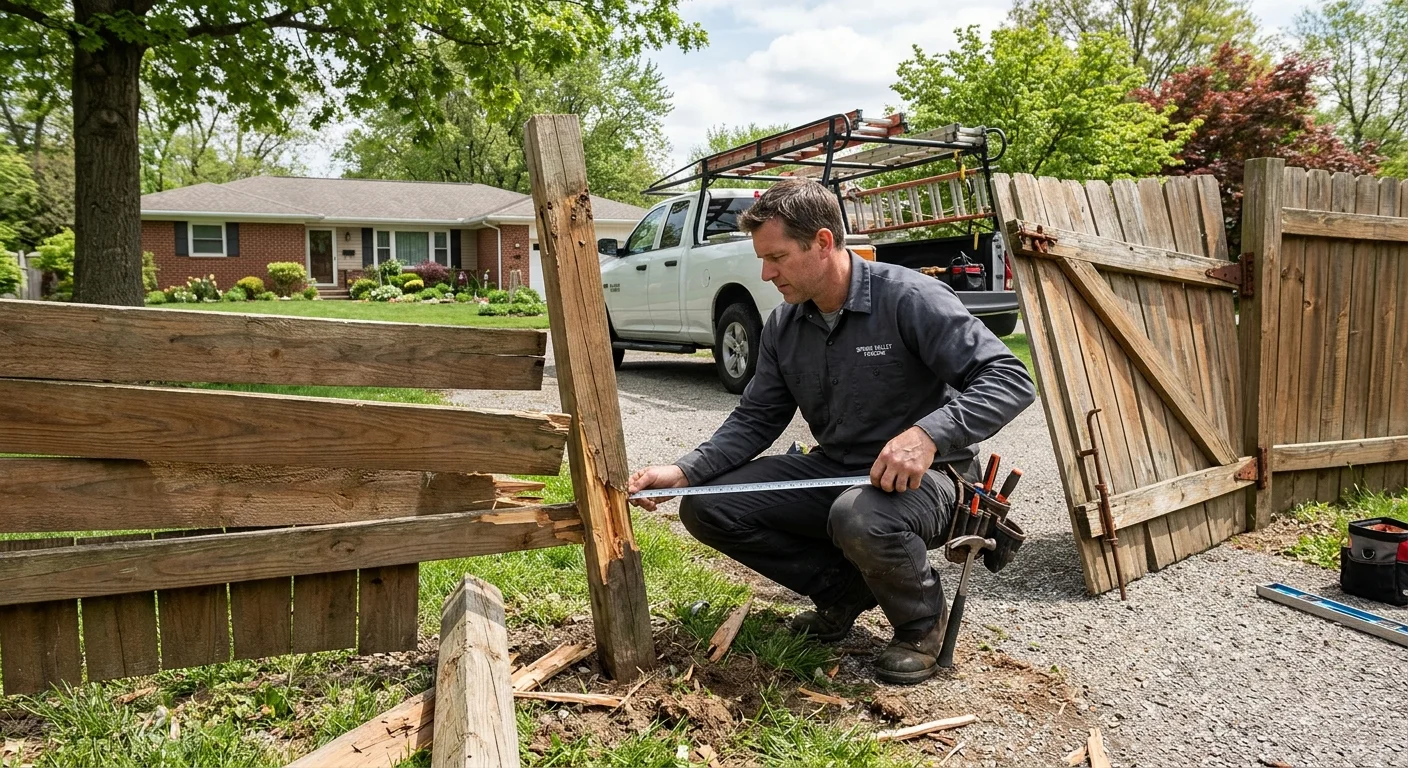
How to document posts, panels, and gates before requesting quotes
Start by walking both sides of the fence when access allows. Give each fence run a simple label, such as driveway side or rear boundary. Those labels help contractors connect your notes with the correct photos.
Take a wide photo showing the full fence run. Then photograph each damaged post, rail, panel, and gate. Include close views of cracks, separation, corrosion, missing fasteners, or visible movement. Don’t diagnose the cause unless a contractor has already confirmed it.
Write down what happens when you touch or operate each section. Note whether a post moves, a panel rattles, or a gate drags. Record whether the gate problem happens throughout its swing or near the latch. A short video can show movement that still photos miss.
Include visible material and finish details. A contractor needs to know whether the fence uses wood boards, vinyl sections, metal components, or chain-link fabric. Photograph post caps, rails, hinges, latches, brackets, and connections between materials. Matching an existing design may require different work than installing a contrasting repair.
Mark any damage that appears connected. A dragging gate, loose post, and separated panel might need one coordinated scope. They shouldn’t automatically become three unrelated line items.
Send the same notes and photos to every contractor. That gives each bidder the same starting information. An onsite inspection can then confirm what photographs can’t show. Our fence repair and restoration service can connect you with an independent, licensed local contractor for that evaluation.
What access and grade details a contractor needs
A fence quote needs more than photographs of the damage. The contractor also needs to understand how workers and materials can reach it.
Describe the path from the street or driveway to the fence. Mention narrow side yards, stairs, gates, low overhangs, planted areas, and outdoor equipment. If access crosses another property, say that before the visit. Don’t assume the contractor can use a neighboring driveway or yard.
Photograph the entire access path. Show its narrowest points and any changes in elevation. Include obstacles that can’t be moved. For movable items, ask whether the contractor expects you to clear them before work begins.
Grade matters because the repair must meet the surrounding fence correctly. If the property steps downhill, photograph the fence from both ends. Show whether panels follow the slope or step between posts. Include retaining walls, raised planters, concrete edges, and drainage features visible near the damaged area.
Don’t combine masonry work with fence work without clarification. California’s C-13 fencing classification covers fence and gate repair, but it excludes masonry walls. If a fence sits on a damaged wall, ask each contractor to identify which portion falls within the proposed fence scope.
Note where debris could be staged and removed. Ask whether haul-away, surface protection, and cleanup appear in the written quote. These details can change how two otherwise similar proposals compare.
For broader local hiring context, read our Spring Valley fence company guide. Keep this repair request focused on the damaged sections and the access needed to reach them.
How to separate stabilization from optional upgrades
A strong quote separates the work needed to stabilize the existing fence from elective changes. Without that separation, a larger improvement package can hide the cost and scope of the actual repair.
Ask the contractor to label the base repair clearly. It should identify the components being secured, reset, rebuilt, or replaced. It should also state which nearby sections remain untouched. If temporary stabilization is proposed, the quote should distinguish it from the permanent repair.
Optional upgrades belong in separate sections. Examples include changing the board pattern, replacing matching hardware throughout the yard, adding decorative trim, or expanding the repaired area. These choices may be useful, but they shouldn’t be presented as though they’re part of the original damage.
Ask what visible conditions could change the scope after work begins. A contractor may not be able to confirm every concealed condition during the first inspection. The quote should explain how additional work would be documented and approved instead of leaving that process unclear.
Priorities also matter when several fence runs need attention. Ask the contractor to identify which sections require repair now and which can remain as they are. That distinction should come from the professional’s inspection, not an assumption based only on appearance.
Keep appearance matching separate from structural repair. Exact color, texture, hardware, or board profiles may require a product decision. Ask the contractor to state whether the proposal matches the existing fence, uses the closest available option, or intentionally creates a contrasting section.
This structure keeps the decision readable. You can approve the core repair while considering upgrades on their own merits.
Which repair and replacement details should be priced separately
Each quote should show what the contractor intends to repair and replace. A single description such as “fix damaged fence” doesn’t provide enough detail for a fair comparison.
Posts and footings should have their own scope. The proposal should identify which posts are affected and whether each one will be reset, reinforced, or replaced. Ask how the contractor will handle connected rails and panels during that work. Our guide to repairing fence post footings in San Diego explains the questions worth raising before approving that portion.
Rails, boards, panels, and caps should be listed separately when their treatment differs. The quote should state which existing pieces remain and which new pieces are included. It should also identify any finishing work included for repaired areas.
Gate work needs its own line items. Ask the contractor to separate the gate frame, posts, hinges, latch, stops, and other hardware. A gate adjustment isn’t the same scope as rebuilding the opening or replacing supporting posts.
The proposal should also address removal and disposal. Ask whether damaged material will be removed from the property. If you want reusable pieces saved, put that request in writing before work begins.
Repair and replacement alternatives should be easy to compare. For a damaged wood section, one option might preserve serviceable components while another replaces the full run. The wood fence repair versus replacement guide can help you organize that decision without assuming one answer fits every fence.
Finally, review exclusions. Ask who handles paint, stain, landscaping, masonry, access preparation, and permit tasks. If a contractor offers a warranty, the quote should identify its provider, coverage, and written terms. Fence Pros San Diego doesn’t perform the work, set prices, or provide warranties.
Who can confirm current permit questions for the property
Use the exact property address to identify the planning or building authority responsible for it. Don’t rely only on the Spring Valley mailing label. Spring Valley is generally unincorporated County of San Diego, so County Planning and Development Services is the usual desk, but a parcel can still sit in an incorporated city. Confirm that first.
If the parcel is unincorporated, County PDS 070 (rev. 01/01/2023) requires a building permit for any fence except fences and freestanding masonry walls not exceeding 6 feet that also meet County zoning, plus a narrow open security-fence exception that is not a typical backyard repair. The same bulletin’s zoning excerpt lists 42 inches in a front or exterior side yard and 72 inches in a rear or interior side yard. Like-for-like repair at the same height and line often stays off that building-permit desk, but raising height, moving the line, or a pool enclosure can change the answer.
Do not guess a Spring Valley-only measurement beyond that County bulletin. Contact the counter responsible for the address and keep the answer with the quote.
Give the authority a precise description. Explain whether the work keeps the same location and configuration or changes them. Mention gates, masonry walls, street-facing sections, pools, and other conditions that could affect the review. Ask for the answer in writing when possible.
The contractor’s quote should state whether permit research, applications, fees, inspections, or corrections are included. It should also identify tasks assigned to the property owner. A vague statement that permits are “handled” doesn’t explain responsibility.
California’s C-13 classification authorizes licensed fencing contractors to alter or repair fences and gates, while excluding masonry walls. You can verify a contractor through the California Contractors State License Board license check.
Shared boundary work brings another issue. California Civil Code Section 841 creates a presumption that adjoining landowners share reasonable fence costs equally unless they agree otherwise in writing. It also requires advance written notice before costs are incurred. That notice must describe the problem, proposed solution, estimated costs, proposed cost sharing, and timeline. A written agreement can change the equal-cost presumption. Review the current statute before treating a contractor’s quote as notice to a neighbor.
When to call us
Call when damaged posts, panels, or gate components need a licensed fence professional’s evaluation. Call us at (858) 400-4906 and we’ll connect you with a licensed fence contractor.