Spring Valley sits in the dry, sun-baked middle of East County, and fencing here behaves differently than it does near the coast. The heat is harder, the UV is stronger, and a lot of the lots run up and down hillsides instead of sitting flat. Add unincorporated county permit rules and a patchwork of older fencing styles, and picking the right fence company matters.
Fence Pros San Diego is a referral service. We introduce homeowners to independent contractors. We do not install, set posts, or publish Spring Valley price bands.
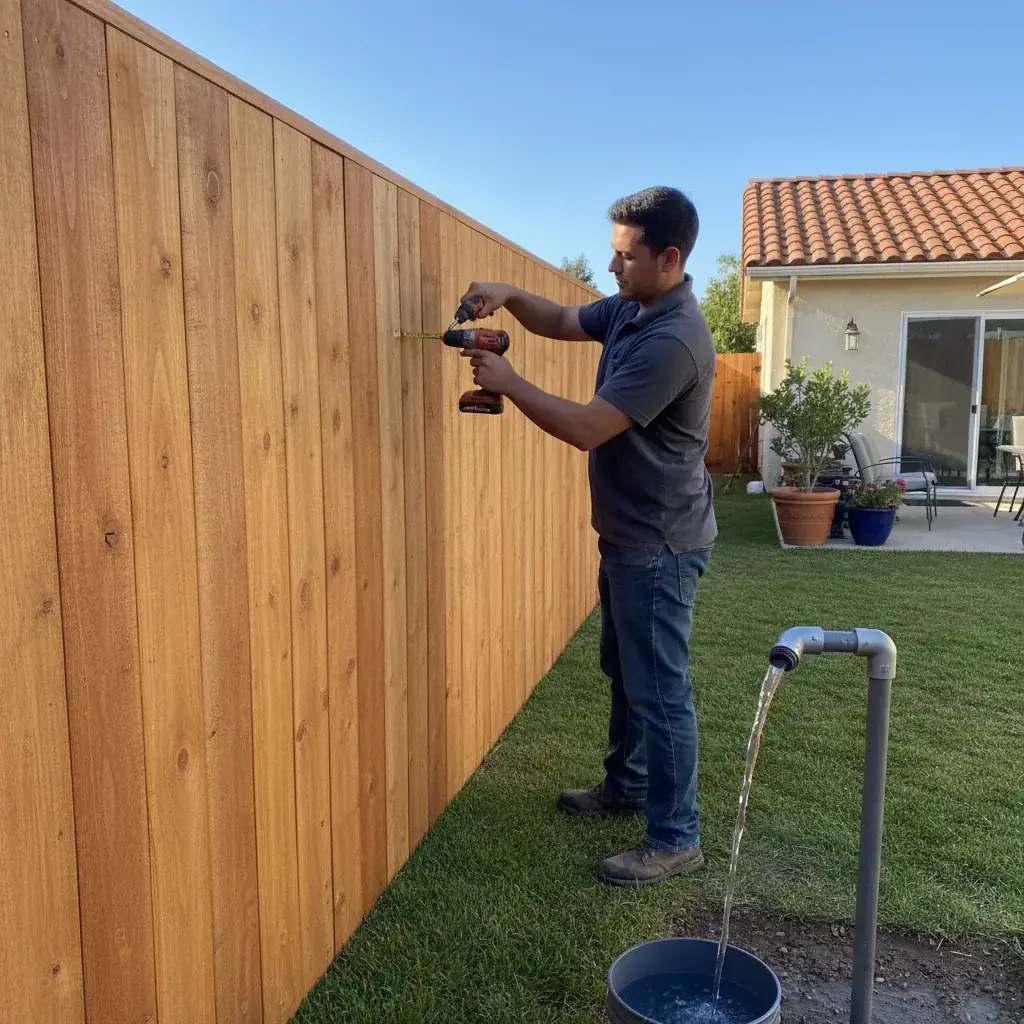
Best fence materials for Spring Valley’s heat and UV
The common mistake is choosing fence material as if you live at the beach. East County runs hot and dry, with long stretches of very hot afternoons in summer and strong year-round UV. That combination cooks cheap materials.
Budget pine pickets look fine on day one. A Spring Valley summer dries them, warps boards, and splits pickets. Cedar and redwood are the wood materials that belong in the conversation. They take heat and sun better than pine. They will still gray and need stain or sealer to keep color, but the structure holds up better. If you want a wood privacy fence here, cedar is the floor, not pine. See cedar fence pros and cons.
Vinyl is the other strong option, but grade matters. Cheap vinyl gets brittle and chalky under inland UV. Named vinyl with UV inhibitors is the version that lasts. It costs more up front in most bids and then skips refinishing.
Chain link is everywhere in Spring Valley for a reason. It handles the heat, and galvanized or vinyl-coated mesh is a working enclosure. For back lots, side yards, dog runs, and larger parcels, it is often the practical class. You can add privacy slats later if you want to block sightlines.
Fencing sloped and hillside lots
A big share of Spring Valley sits on grade. Casa de Oro, the streets climbing toward Rancho San Diego, and plenty of older La Presa neighborhoods have lots that drop or rise across the property line. That changes how a fence has to be built.
There are two ways to run a fence down a slope. Stepped fencing keeps each panel level and drops it like a staircase, leaving small triangular gaps under each section. It looks clean with vinyl and panelized wood and works on moderate grades. Raked (or racked) fencing tilts the rails to follow the ground so the fence runs parallel to the slope with fewer gaps underneath. Racking suits steeper or continuous grades and keeps pets from slipping under, but not every style racks cleanly.
Footings separate a fence that lasts from one that leans. On a hillside, posts take more lateral load and the soil moves with dry-and-wet cycles. Ask the bid to state footing depth and diameter on sloped lots, not only on the flat. County PDS 070’s wood-post notes recommend at least 24 inches into undisturbed ground or compacted fill in a 12-inch-diameter concrete footing, over gravel, with the wood post through to the gravel. That is a County recommendation, not a failure timetable. If you are working with grade, fencing a sloped yard in San Diego is worth reading before you get quotes.
When you call around, ask any company how they handle your slope. A useful answer covers stepped versus raked, footing depth, and drainage. A vague answer is a sign they install flat-lot fences and treat hills as an afterthought.
What a fence costs in Spring Valley
There is no honest Spring Valley per-foot card here. Chain link, cedar privacy, and Class-A vinyl are different classes. Sloped lots add labor and footing work. Old fence removal, gates, and rocky or rooty digging also move the number. See San Diego fence cost for 2026. Always get itemized written quotes. Be wary of any bid that is only one round number.
Once you have a contractor’s quoted rate, use the quote subtotal worksheet. It does not supply market prices.
Permits in unincorporated San Diego County
Much of Spring Valley, La Presa, Casa de Oro, and the Rancho San Diego area is unincorporated. That means San Diego County Planning and Development Services, not a city building department. Confirm the address is not actually in La Mesa or El Cajon.
County PDS 070 lists a building-permit exemption for zoning-compliant fences or walls no higher than six feet. The published zoning summary is 42 inches at the front and exterior side and 72 inches at the rear and interior side. Fence portions within 5 feet of a building must meet the form’s fire-resistive construction note. Visibility, easements, and other rules may still apply. A 6-foot interior fence can still fail zoning even when the building-permit box is exempt.
Because Spring Valley has so much grade, the retaining-wall question comes up more here than in flat parts of the county. If your fence sits on top of a wall that holds back soil, that is a different permit conversation. Confirm height measurement with the County before you build.
For how the rules shift from one community to the next, San Diego fence permit guide by city.
Choosing a fence company in Spring Valley
Start with the license. Any contractor doing fence work in California should carry an active state license. Check it at cslb.ca.gov. Confirm the license is active, the name matches who you are hiring, and the classification fits the work. C-13 covers fences and gates and excludes masonry walls.
Next, look for East County experience. Ask whether they have fenced sloped lots in Spring Valley, what material they would recommend for the heat and why, and how they will set posts on your grade. Get more than one written, itemized quote. Make sure each one spells out material grade, fence height, footing approach, old fence removal, gates, and any permit handling.
If you want help with a new fence, start with fence installation. If you are patching an existing one, fence repair. For budget enclosures and larger lots, chain link fence.
Frequently asked questions
What’s the best fence material for Spring Valley’s heat?
Cedar or redwood for wood, and named UV-stabilized vinyl if you want low maintenance. Skip budget pine. Galvanized chain link is a heat-tolerant, affordable class for back lots and larger parcels.
Do I need a permit to build a fence in Spring Valley?
If the address is unincorporated, you fall under County PDS 070, not a city. Qualifying fences not over 6 feet can be permit-exempt when zoning-compliant. Taller fences, front-yard limits, fire-near-building notes, and any fence tied to a retaining wall often need more review. Verify with the County before you build.
How much does a fence cost in Spring Valley?
There is no supported installed band on this page. Compare itemized bids for the same line. Slope and footings are usually the extras that move East County jobs.
Why does fencing a hillside lot cost more?
Sloped lots need stepped or racked panels and more careful footings so posts do not lean as the soil shifts. That is more labor, more concrete, and more layout than a flat yard. Footing depth is the first thing to ask any company about on a grade.
When to call us
If you are weighing materials, staring at a hillside lot, or trying to figure out whether the County needs to sign off, call (858) 400-4906. We can introduce you to an independent contractor. Confirm East County heat, sloped-lot footings, and PDS 070 with that contractor and the County. You can also start with the Spring Valley fence page.