A privacy fence gives you a finished, private yard the day it goes in. A hedge costs less to plant but takes two to five years to actually block a view, and it needs water and trimming for as long as you own the house. Neither answer is wrong. It depends on how fast you need privacy, how much upkeep you want, and whether your HOA has an opinion.
The real trade-off
A privacy fence is a one-time build. A hedge is a living thing you’re planting and then managing for decades. Once you frame it that way, most of the decision points fall out on their own: speed, cost, maintenance, water, rules, and how the yard actually looks day to day.
We install fences for a living, so we’re not neutral here. But we tell every homeowner who asks the same thing: if you need privacy this summer, a hedge won’t get you there. If you’ve got years to wait and you like the softer look, a hedge earns its keep.
Speed to privacy
This is the biggest practical difference. A fence is private the afternoon it’s finished. A young hedge is a row of skinny plants with gaps you can see straight through.
Podocarpus, the plant most San Diego landscapers reach for when a client asks for a privacy hedge, typically needs three to five years at standard nursery spacing to fully screen a yard. Italian cypress fills in faster in the vertical direction but stays narrow, so you need more plants per foot of fence line to actually block sightlines. Clumping bamboo can screen a yard in two to three years if it’s watered well, but it needs a root barrier or it spreads into places you didn’t plan for.
If your neighbor just added a second story, or you’re selling in a year, a hedge isn’t a real option. A fence solves the problem now.
Upfront cost vs. long-term cost
A wood or vinyl privacy fence in San Diego runs roughly $25 to $55 per linear foot installed, depending on material, height, and how much grading or gate work is involved. That’s the full cost, paid once, and then you’re done except for occasional staining or a hardware fix.
A hedge is cheaper to plant. Five-gallon Podocarpus or cypress starts run a fraction of what a linear foot of fence costs. But you’re not done when the plants go in the ground. You’re paying for irrigation lines, ongoing water, and either your own time or a gardener’s, twice a year at minimum, for as long as the hedge exists. Add up five years of water and trimming and a hedge often lands close to fence pricing anyway, it’s just spread out instead of paid at once.
Maintenance and water
A fence needs almost nothing. Rinse it off, restain a wood fence every few years, replace a board if it cracks. That’s the whole list.
A hedge is ongoing work. Podocarpus and cypress need shaping at least once or twice a year to stay dense and even. Skip a season and you get gaps at the bottom, which defeats the point of a privacy hedge in the first place. Ficus grows fast and screens quickly, but we’d flag it as a real caution near foundations, pools, or hardscape. Ficus roots are aggressive and have cracked pool decking and lifted pavers in yards we’ve worked near. If you’re set on Ficus, keep it well away from anything you don’t want disturbed.
Water is the other cost people forget. San Diego is a drought-conscious region, and a mature hedge line uses meaningfully more water than a fence uses in its entire lifespan (which is zero). If your water bill already stresses you out, that’s worth weighing.
Lifespan
A well-built wood fence lasts 15 to 20 years. Vinyl often outlasts that. A healthy hedge can live for decades too, but it’s more vulnerable along the way: drought stress, root disease, an unusually cold snap, or just uneven growth that leaves thin spots. A fence fails predictably (a board rots, a post leans). A hedge can fail unevenly and take a season or two to notice.
HOA and setback rules
Most San Diego HOAs regulate fence height, material, and color, and you’ll usually need a plan submitted before you build. Hedges are regulated less consistently. Some HOAs don’t mention plantings at all; others cap hedge height along shared property lines the same way they cap fences. If you’re in a planned community, check your CC&Rs for both before you commit, and don’t assume a hedge skips the approval process just because it’s not “construction.”
Setback rules from the city are typically about structures, so they mostly apply to fences, not hedges. A hedge can usually go right up to the property line as long as it doesn’t cross it. That’s a real point in a hedge’s favor if you’re working with a tight side yard.
The hybrid a lot of San Diego homeowners choose
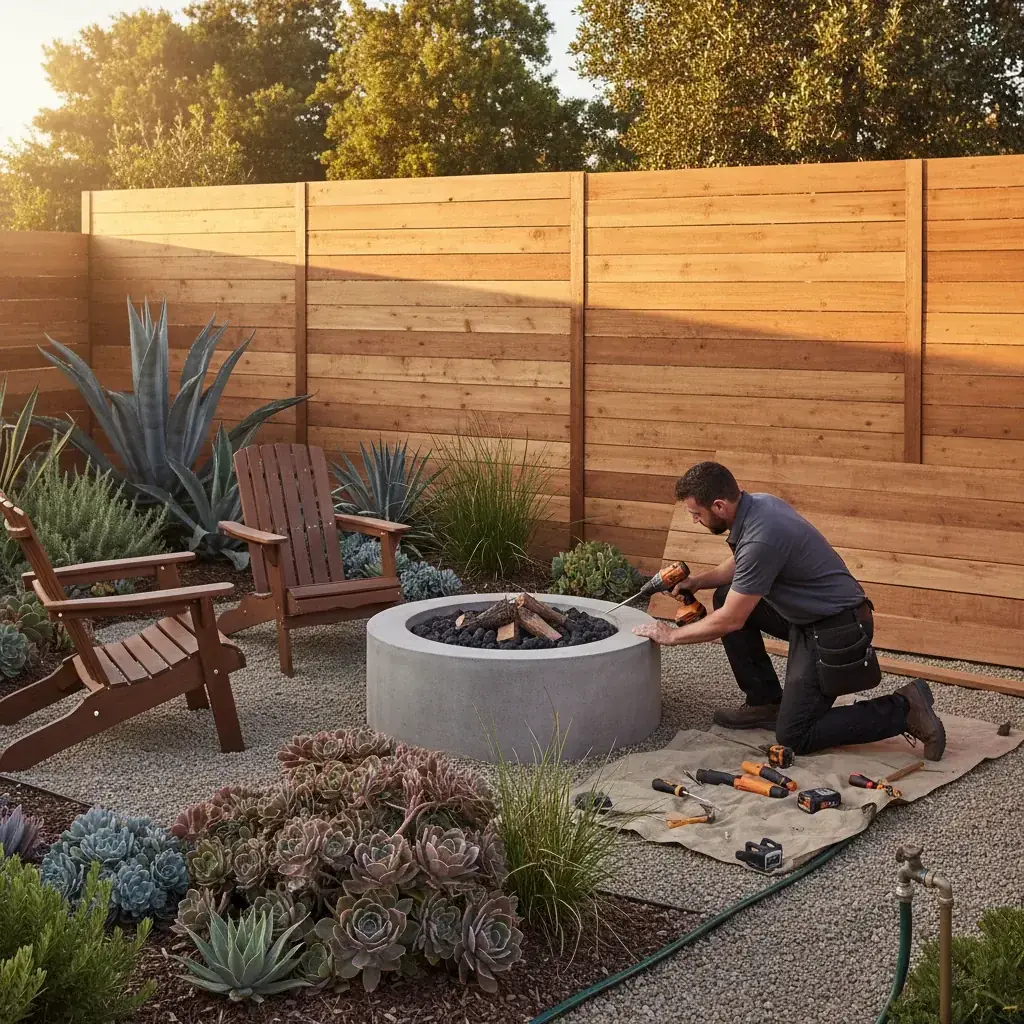
You don’t have to pick one. The most common setup we see is a fence for privacy and a hedge planted just behind it or along it, for the fence’s the wall and the hedge is the finish, once it fills in. You get the instant privacy on day one, the fence protects the young plants from wind and stress while they establish, and in a few years you’ve got a fence backed by greenery instead of a bare panel. If your budget allows for it, this is genuinely the best of both, and it’s why a lot of the yards we build in are already planning a hedge line for later.
For more layout ideas, our post on privacy fence ideas covers a few builds designed with exactly this pairing in mind. And if you’re still comparing materials for the fence half of that combo, the best privacy fence for San Diego breaks that down by zone.
Frequently asked questions
Is a hedge cheaper than a fence in San Diego?
Upfront, yes. Plants cost less than fence materials and labor. Over five to ten years, once you count irrigation, water bills, and regular trimming, a hedge often ends up close to what a fence costs, just spread out over time instead of paid once.
What’s the fastest-growing privacy hedge for San Diego yards?
Clumping bamboo and Ficus grow the fastest, often screening a yard within two to three years with good water. Podocarpus and Italian cypress are slower, usually three to five years, but need less long-term management once established.
Can I plant a hedge instead of building a fence to meet HOA privacy rules?
Sometimes, but check your CC&Rs first. Some HOAs regulate hedge height the same as fence height, especially along shared property lines. Others don’t address plantings at all. Don’t assume a hedge avoids the approval process.
Is Ficus a bad idea for a privacy hedge?
Not automatically, but keep it away from pools, foundations, and hardscape. Ficus roots grow aggressively and have a track record of cracking concrete and lifting pavers. It’s a strong choice for an open yard with no structures nearby.
Does a fence or a hedge add more home value?
A fence adds value on its own, since it’s a visible, finished improvement buyers can see immediately. A mature hedge can add value too, but only once it’s actually filled in. A young, gappy hedge doesn’t read as an amenity yet.
Can I build a fence now and add a hedge later?
Yes, and it’s one of the most common approaches in San Diego. Build the fence for immediate privacy, then plant a hedge along it. The fence protects young plants while they establish, and you get a layered, more finished look once the hedge matures.
Have questions about privacy fencing for your yard? Call Fence Pros San Diego at (858) 400-4906.