In La Jolla, most fence projects require a Coastal Development Permit because the community sits inside the Coastal Overlay Zone, and standard San Diego height limits of 3 feet (front yard) and 6 feet (side and rear yards) can be reduced further by the La Jolla Planned District Ordinance’s view-corridor rules. Front-yard solid fences cap at 3 feet, open-style fences at 4 feet, and any fence that blocks a designated ocean view corridor can be denied regardless of height. Getting this right means understanding three overlapping layers of rules: city code, the PDO, and your HOA’s CC&Rs.

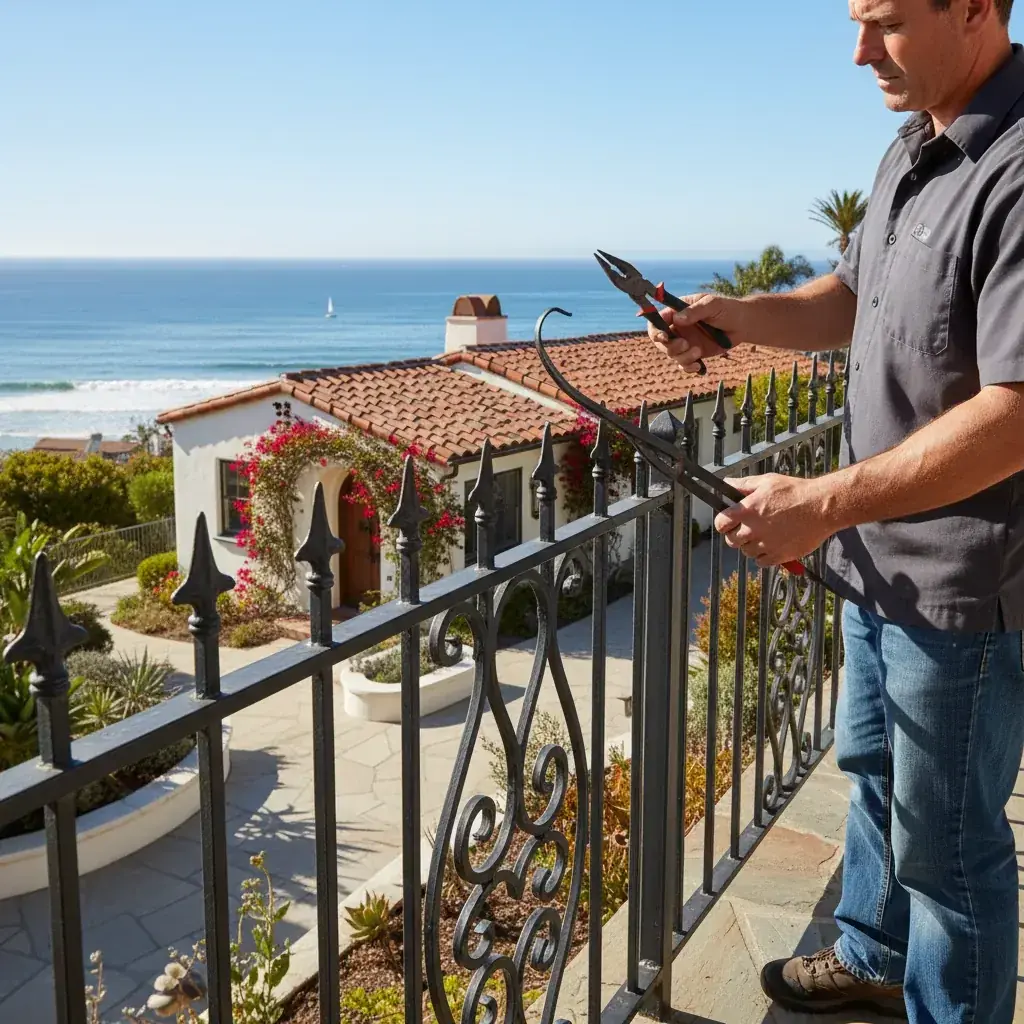
An elegant wrought iron fence in front of a Spanish-style home in La Jolla, with the Pacific Ocean visible in the background.

For most of San Diego County, a simple fence project under six feet doesn’t require a permit. La Jolla is different. Much of the community lies within the Coastal Overlay Zone, which triggers a more rigorous review process to protect public access, coastal resources, and those famous ocean views.

This means you’ll likely need a Coastal Development Permit (CDP) for your fence. A CDP is a discretionary permit, meaning it’s not automatically approved. The city’s development services department will review your project’s potential impact on the surrounding area.

Here’s what the process generally involves:

  • Initial Review: We start by determining if your property falls within the Coastal Zone and which specific regulations of the La Jolla Planned District Ordinance (PDO) apply. The PDO contains development regulations tailored specifically for La Jolla’s distinct neighborhoods.
  • Project Plans: Detailed plans are required. These aren’t just simple sketches; they must show the fence’s exact location, height, materials, and design in relation to property lines, existing structures, and public rights-of-way.
  • Community Planning Group Review: Before the city makes a decision, your project will likely be presented to the La Jolla Community Planning Association (LJCPA) or one of its subcommittees. They provide recommendations to the city based on community feedback and adherence to local plans. This is a critical step where neighborhood context and “unwritten rules” come into play.
  • City Decision: The city planner assigned to your project will review all materials, including the community group’s recommendation, and decide whether to approve, deny, or approve your CDP with conditions.

Because this process is more involved than a standard permit, it’s crucial to work with a fence contractor who has experience in the area. As a dedicated fence company la jolla homeowners trust, we handle the entire fence permit la jolla process for our clients. For a broader overview of permitting across the county, you can read our guide to San Diego fence permits by city.

Common fence height and setback rules for the area

While the City of San Diego has standard fence regulations, La Jolla’s PDO and coastal rules often add specific constraints. It’s not enough to know the general rule; you have to know the La Jolla rule.

Here are the basics and the La Jolla-specific considerations:

Standard Height Limits

  • Front Yard: In most residential zones, fences in the front yard (the area between the street and the front of your house) are limited to 3 feet in height if they are solid, or 4 feet if they are more than 50% open (like a picket or wrought iron fence).
  • Side and Rear Yards: Fences in the side and rear yards are generally limited to 6 feet in height. On corner lots, specific “street side yard” rules may apply, often restricting height to 3 feet within a certain distance of the corner to ensure traffic visibility.

La Jolla’s Special Conditions

  • View Corridors: This is the most significant factor in La Jolla. The PDO places a high priority on preserving public and private views of the ocean. A proposed 6-foot fence, even if it meets the standard code, could be denied or required to be shorter or more transparent if it’s found to block a designated view corridor.
  • Top of Retaining Walls: If you’re building a fence on top of a retaining wall, the combined height is measured from the base of the wall. The rules here are complex, but generally, the total height (wall + fence) cannot exceed 6 feet in a side/rear yard without triggering more intense review.
  • Setbacks: Fences can typically be built directly on the property line. However, in La Jolla, project reviewers may require a small setback from a public walkway or bluff edge to preserve coastal access or ensure geological stability.

Navigating these la jolla fence regulations requires careful site analysis and a design that respects the neighborhood’s character. We always conduct a thorough review of your property’s specific zoning and location within the PDO to design a fence that is both beautiful and compliant.

HOA-approved styles in neighborhoods like La Jolla Shores and Bird Rock

Beyond the city’s municipal code, many of La Jolla’s most desirable neighborhoods have Homeowners Associations (HOAs) with their own architectural guidelines. These rules, often called CC&Rs (Covenants, Conditions, and Restrictions), are designed to maintain a cohesive and high-end aesthetic throughout the community.

While each HOA is different, we see common themes in the styles and materials they approve:

La Jolla Shores & Muirlands

These areas often favor a classic, elegant look that complements Spanish, Mediterranean, and traditional architecture.

  • Wrought Iron: Classic and timeless, wrought iron fences are a popular choice. They provide security without obstructing views, making them ideal for front yards and properties overlooking the ocean. Designs often feature simple vertical pickets, decorative finials, and graceful arches over gates.
  • Stucco Walls with Insets: A low stucco or masonry wall, often matching the home’s exterior, is frequently used as a base. This can be combined with wrought iron or wood panel insets for a sophisticated, integrated look.
  • Natural Wood: High-quality wood fences, particularly those made from Ipe, Mangaris, or clear redwood, are common. Styles often include board-on-board for privacy or horizontal plank designs for a more modern take on a classic material.

Bird Rock & The Village

These neighborhoods often embrace a slightly more eclectic or contemporary style, mixing classic looks with modern design elements.

  • Horizontal Fences: Ipe or redwood horizontal plank fences are extremely popular, offering a clean, modern aesthetic that provides excellent privacy. The warm wood tones contrast beautifully with the coastal landscape.
  • Powder-Coated Aluminum: For homeowners who want the look of wrought iron without the maintenance, powder-coated aluminum is an excellent HOA-approved alternative. It offers clean lines, comes in various colors (black, bronze, white), and holds up exceptionally well to the salt air.
  • Glass Panels: On properties with premium ocean views, glass panel fences or railings are the ultimate choice. Framed with stainless steel or aluminum, they provide a necessary safety barrier without impeding the view at all. These are most common for pools, decks, and bluff-top properties.

Before starting any fence installation, we always recommend obtaining a written copy of your HOA’s specific guidelines. We can then design a fence that meets both city regulations and your community’s unique aesthetic standards.

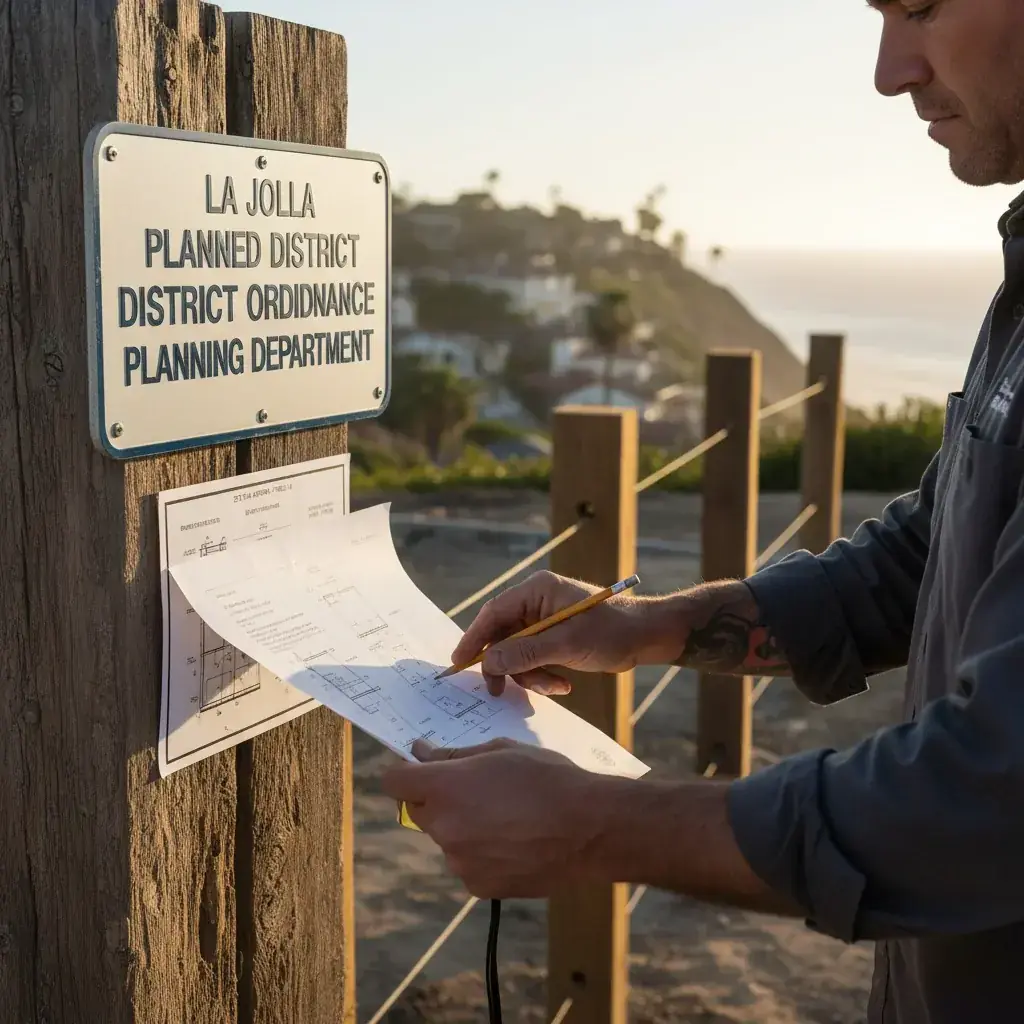
A photo of a planning department sign or document related to the La Jolla PDO (Planned District Ordinance).

Material choices that last by the ocean: what works and what doesn’t

The “La Jolla Tax” isn’t just about property values; it’s also what the Pacific Ocean charges for living next to it. The constant salt spray, humidity, and intense sun will destroy inferior fence materials in just a few years. Choosing the right materials isn’t just about looks, it’s about making a long-term investment.

What Works Best in La Jolla

  • Powder-Coated Aluminum: This is arguably one of the best choices for a coastal environment. Aluminum doesn’t rust. When protected by a thick, baked-on powder coating, it’s virtually immune to corrosion from salt air. It’s lightweight, strong, and requires minimal maintenance.
  • High-Grade Vinyl (PVC): Modern, high-quality vinyl is a world away from the cheap, flimsy panels you might imagine. Look for products with high levels of titanium dioxide (for UV protection) and thick-walled extrusions. It will never rot, rust, or need painting, and it can be cleaned with soap and water.
  • Tropical Hardwoods (Ipe, Mangaris): These dense, oily woods are naturally resistant to rot, decay, and insects. While they are a premium investment upfront, an Ipe fence can last for 50 years or more with minimal maintenance. They can be sealed to maintain their rich color or allowed to weather to a graceful silver-gray.
  • Galvanized & Powder-Coated Steel/Iron: If you want the heft and classic look of true wrought iron, it must be properly protected. The best process involves hot-dip galvanizing the steel (coating it in zinc) and then applying a durable powder-coat finish. This dual-layer system provides excellent rust protection.
  • Stainless Steel Hardware: No matter which fence material you choose, the hardware, screws, nails, hinges, and latches, must be high-grade (316 or 304) stainless steel. Standard galvanized hardware will rust and leave ugly streaks on your beautiful new fence within a year.

What to Avoid

  • Untreated Pine or Fir: Standard pressure-treated pine from a big-box store is not suitable for the La Jolla coast. The salt air accelerates decay, and it will quickly warp, crack, and rot.
  • Bare Steel or Iron: Any ferrous metal left unprotected will begin to rust almost immediately. A simple coat of spray paint is not enough to protect it from the relentless salty moisture.
  • Low-Quality Vinyl: Cheap vinyl fences lack UV inhibitors and are made with thinner walls. They will become brittle, yellow, and crack under the intense San Diego sun.
  • Standard Fasteners: Using the wrong screws is the fastest way to ruin a great fence. Rusting fasteners will fail, causing pickets and panels to loosen, and will stain the surrounding material.

Frequently asked questions

Do I need a permit to build a fence in La Jolla?

Most fence projects in La Jolla require a Coastal Development Permit because the community falls inside San Diego’s Coastal Overlay Zone. Unlike other parts of the county where a fence under six feet may not need a permit, La Jolla’s position in the coastal zone triggers a discretionary review process. The permit application goes through the development services department and is typically reviewed by the La Jolla Community Planning Association before a city planner issues a decision.

How tall can a fence be in La Jolla?

Standard San Diego code allows solid front-yard fences up to 3 feet, open-style front-yard fences (more than 50% open) up to 4 feet, and side and rear yard fences up to 6 feet. In La Jolla, those limits can be reduced further by the PDO’s view-corridor protections. A fence that technically meets the 6-foot rule can still be denied or required to be shorter if it blocks a designated ocean view corridor, so the practical maximum varies by property location and orientation.

What fence materials hold up best to La Jolla’s salt air?

Powder-coated aluminum and high-grade vinyl are the top performers in coastal conditions because neither rusts or rots. Tropical hardwoods like Ipe and Mangaris are also a strong choice since their dense, oily grain resists moisture and salt naturally. Any metal fence, including wrought iron, needs hot-dip galvanizing plus a powder-coat topcoat to survive the marine environment long term. Regardless of the primary material, always use 304 or 316 stainless steel fasteners.

Does my HOA have separate fence rules from the city?

Yes. Many La Jolla neighborhoods, including La Jolla Shores, the Muirlands, and Bird Rock, have HOAs with architectural guidelines that sit on top of city code. Those CC&Rs typically specify approved materials, colors, and styles, and they require written approval before construction begins. Getting HOA sign-off before pulling a city permit saves time and avoids costly redesigns. Our team reviews both sets of requirements at the start of every fence installation project.

How long does the La Jolla fence permit process take?

The timeline varies, but plan for four to eight weeks from application submission to approval for a standard residential CDP. Projects that go before the La Jolla Community Planning Association may take longer if they fall on a meeting cycle that doesn’t align with your application date. Having complete, accurate plans at submission is the single biggest factor in keeping the timeline on track.

Can I build a glass panel fence on my La Jolla bluff property?

Glass panel fences are permitted on bluff-top and ocean-view properties and are often the preferred solution because they don’t block the view at all. They require a framing system of stainless steel or powder-coated aluminum, and the glass must meet building code safety ratings. Because bluff-edge projects also involve geological setback requirements, a site-specific review is necessary before finalizing any design. See our overview of privacy fence options if you need a solid barrier elsewhere on the property.

When to call us

Navigating the La Jolla PDO, the coastal permit process, and HOA guidelines requires deep local experience. If you’re planning a fence that enhances your property’s value and stands up to the coastal environment, it’s best to work with a professional. We manage the entire process, from design and permitting to material selection and final installation.

Call us at (858) 925-5546 for a same-day estimate.