TL;DR
- If the post above grade is still solid and the concrete is cracked: reset the concrete or add a steel insert.
- If the post is rotted at grade but solid above: a steel post sleeve is often the conversation. Ask for the product name in the bid.
- If the post is rotted throughout: full replacement. New wood or steel, new concrete.
- We do not publish per-post dollar bands. Compare written scopes.
- Steel inserts and named steel posts do not rot the way wood does at the soil line.
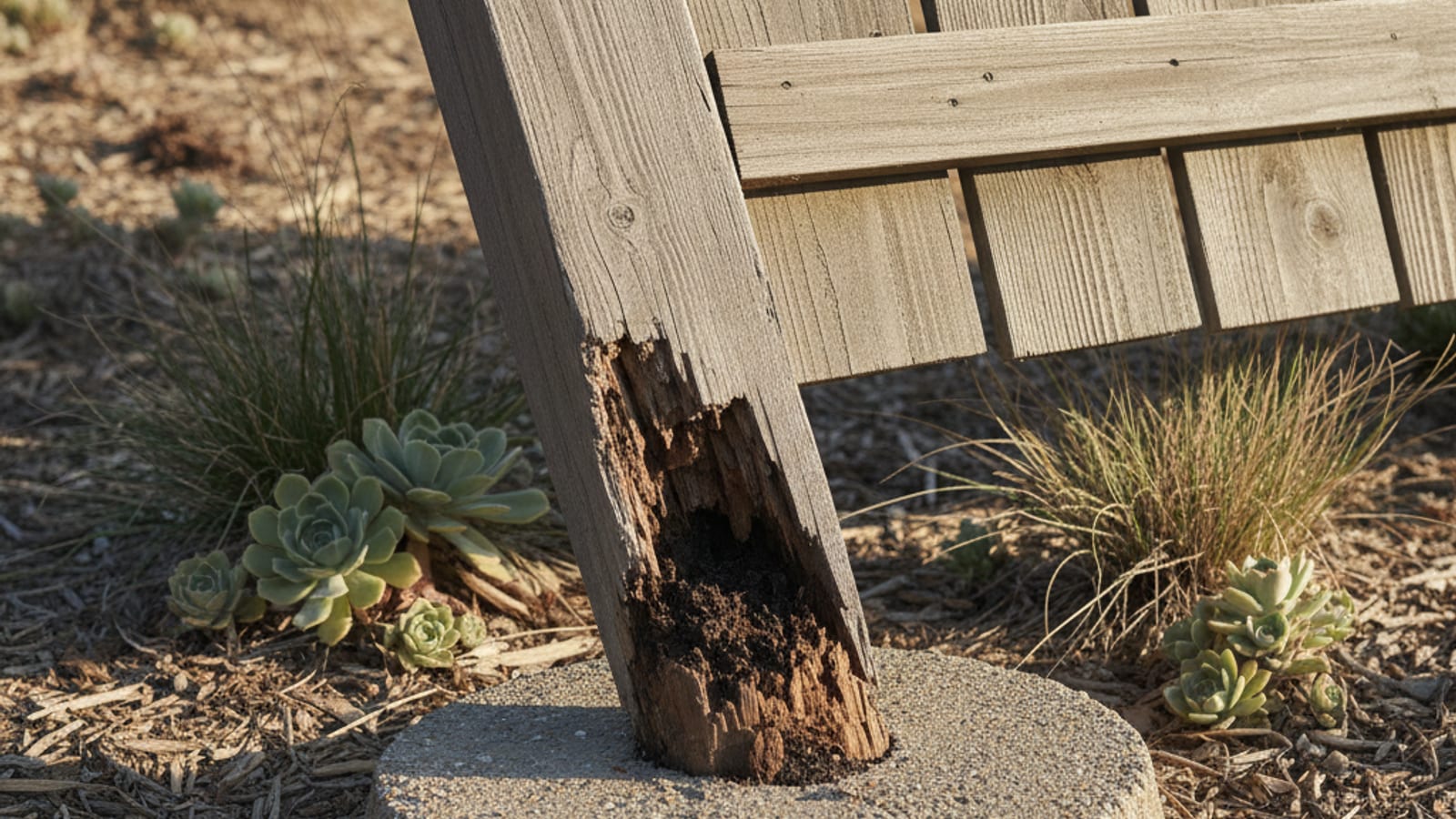
A leaning fence is almost always a post problem, not a panel problem. Rails, pickets, and panels above the post are often still usable. The failure is at the post base where wood meets concrete or dirt. Figuring out whether you need a fence post repair or a replacement comes down to what is actually rotted.
Fence Pros San Diego is a referral service. We do not send trucks, stock inserts, or promise a four-hour finish.
The diagnosis
Stand beside the leaning post. Do three tests:
Test 1: Wiggle the post at chest height.
- No give, just lean: the post is moving in its footing. Concrete issue.
- Visible give, flexes near ground: the post is rotted at grade.
- Whole post rocks in the concrete: concrete is cracked or soil has washed out.
Test 2: Inspect the base. Dig out a few inches of soil at the post base. Look for:
- Solid wood all the way into the concrete: Post wood is fine. Fix is concrete-related.
- Soft, darkened, or crumbly wood at the soil line: Rot at grade. Classic fence failure.
- Cracks in the concrete around the post: Concrete has failed; needs replacement.
- Concrete intact but post rocks: Footing was too shallow or sandy soil eroded under the footing. See repairing fence post footings.
Test 3: Check the wood condition above grade.
- Solid, dry, stain intact: Post wood above grade is fine.
- Cracked, split, or twisted: Post wood itself is failing (usually UV and weather).
- Rotted throughout: Full replacement.
Those three tests tell you which fix to ask for.
Fix type 1: Concrete reset (post wood is fine)
Scenario: The post wood is solid from top to bottom, but the concrete footing has cracked or shifted.
What’s involved:
- Dig out around the concrete footing.
- Break the old concrete.
- Remove chunks.
- Brace the post plumb.
- Pour fresh concrete. Ask the bid for mix, depth, and diameter. County PDS 070’s wood-post notes recommend at least 24 inches into undisturbed ground or compacted fill in a 12-inch-diameter footing, over gravel, with the wood post through to the gravel. That is a County recommendation, not a promise that a shallower hole will fail on a timetable.
- Crown the concrete above grade so water sheds.
- Confirm cure time before reattaching rails.
Works for: Any post where the wood itself is still solid but the concrete has failed.
We will not invent a DIY bag-of-mix total or a pro per-post band.
Fix type 2: Steel post insert (rotted at grade, solid above)
Scenario: The post base has rotted at the soil line, but the upper post is still solid.
What’s involved: A galvanized or stainless steel post insert (contractors often name brands such as Simpson Strong-Tie Postmaster or E-Z Mender). Ask for the exact product. The insert typically:
- Bolts a steel sleeve to the remaining solid wood.
- Uses a steel base in fresh concrete.
- Replaces the rotted wood portion with steel.
Installation outline:
- Cut off the rotted wood at the base.
- Excavate around the base.
- Slide the sleeve onto the remaining post and bolt it.
- Pour fresh concrete around the steel base. Depth belongs in the bid.
- Brace plumb until the concrete cures.
Works for: Many leaning fences in San Diego where only the grade line has failed. Steel does not rot. That is why people choose it over another wood stick in the same wet hole. We will not invent a 20-year vs 7-year scoreboard.
Fix type 3: Full post replacement
Scenario: The post is rotted or damaged throughout, not just at grade.
What’s involved:
- Remove the old post and concrete.
- Detach rails and pickets, keeping what can be reused.
- Dig a new hole to the depth in the bid.
- Set a new post (cedar, pressure-treated, or steel) in fresh concrete.
- Crown concrete above grade.
- Reattach rails and pickets.
- Match stain or finish to the surrounding fence.
Works for: Posts that cannot be salvaged, multiple failure points, or impact damage.
Advantage: You can upgrade size, switch to steel, deepen the footing, and specify stainless hardware. Those upgrades must be written. They are not automatic.
Steel post insert vs wood replacement: which is better?
Steel post insert:
- Steel at grade does not rot.
- Often less disruption to existing panels.
- The sleeve can sit below the visible fence line after backfill.
Wood replacement:
- Looks like original construction.
- Allows a full rebuild (new post, new hardware, matching stain).
- No mixed-material assembly underground.
In many San Diego yards, the insert is the better repair when only the soil line has failed. Full wood replacement wins when the post is damaged above grade or when you are rebuilding several adjacent posts. Compare written scopes. We will not publish a cheaper-on-install dollar pair.
When you need more than one post repaired
If several posts along a single run are leaning or rotted, ask for two prices: individual post repairs versus rebuilding the run with new posts. Panel condition decides as much as post count. We will not invent a 3-post or 5-post rule of thumb, a 150-foot rebuild total, or a break-even post count.
Common DIY mistakes on post repair
Setting a new wood post in the old cracked concrete. The old concrete has already failed.
Skipping a footing depth that matches soil and height. Shallow posts lean again. Ask for inches, not “standard.”
Pouring concrete directly over buried wood. Wood below grade against dirt keeps rotting. Post bottoms should sit on gravel or in a designed footing, not buried wood-to-dirt.
Not crowning the concrete. Flat-topped footings let water pool at the post base.
Zinc-plated hardware in coastal zones. Corrodes fast. Ask for stainless or another corrosion-rated spec on the coast.
Call 811 before you dig.
When post repair won’t save the fence
Sometimes the post is fine but the rest of the fence is dying:
- Rails rotted at connections.
- Pickets falling off in multiple sections.
- Panels twisted or bowed from an original out-of-plumb build.
If the whole fence is tired and the posts are just the most visible symptom, a full rebuild is often the better call. An independent fence repair contractor can sort patch versus rebuild. We are not that crew.
Frequently asked questions
Should I repair or replace a leaning fence post?
Repair it if the wood above grade is still solid and only the base has rotted or the footing has cracked. Replace it when the post is rotted or damaged all the way through. Ask the contractor to name insert versus new post in the bid.
How much does fence post repair cost in San Diego?
There is no supported per-post card on this site. Concrete reset, steel insert, and full replacement are different jobs. Compare itemized quotes.
How long does a fence post repair last?
A steel insert does not rot. A concrete reset lasts as long as the remaining wood. A new wood post will face the same soil-line moisture as the old one. We will not publish year guarantees.
Do fence posts rot faster near the San Diego coast?
Marine humidity, salt air, and sandy soil speed wood rot at the soil line and eat zinc-plated hardware. Homes near the water should specify corrosion-rated hardware and consider steel at grade. The fence post repair contractor you hire should write those choices down.
Can I repair a fence post myself?
A concrete reset is a reasonable DIY project if you can excavate, plumb, and pour. An insert is doable with the right product and tools. Full replacement is harder because you have to detach and re-plumb rails without racking the fence. If more than one post is involved, a licensed contractor is usually the cleaner path.
How deep does a replacement fence post need to be in San Diego?
There is no single citywide depth. County PDS 070 recommends at least 24 inches for its wood-post notes in unincorporated areas. Height, soil, gates, and wind change the number. Ask the proposal for a footing schedule. Posts set too shallow are a common reason a DIY repair leans again.
What to expect on a post call
Single-post and multi-post jobs are scheduled by the contractor, not by this referral line. We do not keep inserts on a truck. If you are not sure whether your fence needs repair or rebuild, send photos of the post bases and the overall fence. The independent pro you are matched with can often diagnose from photos and still may need a site visit before a firm quote. Call (858) 400-4906.