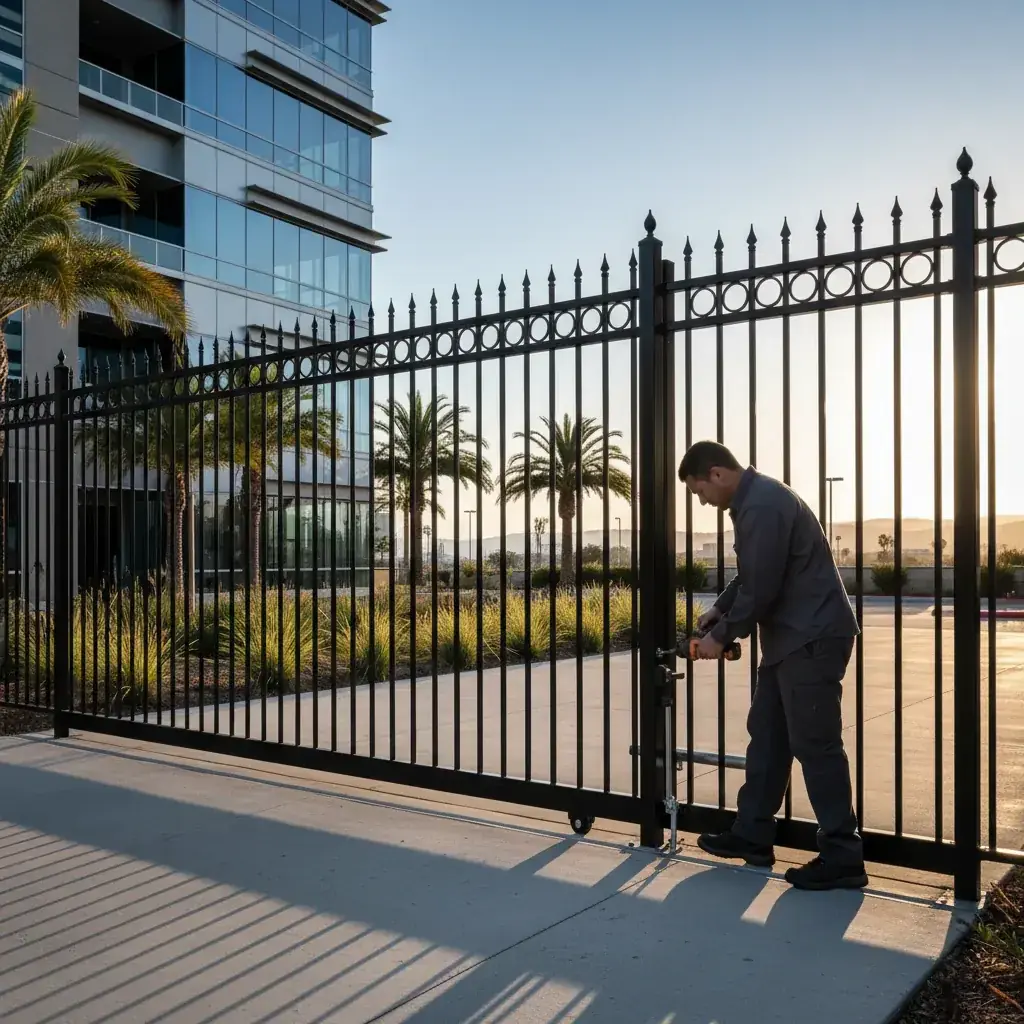
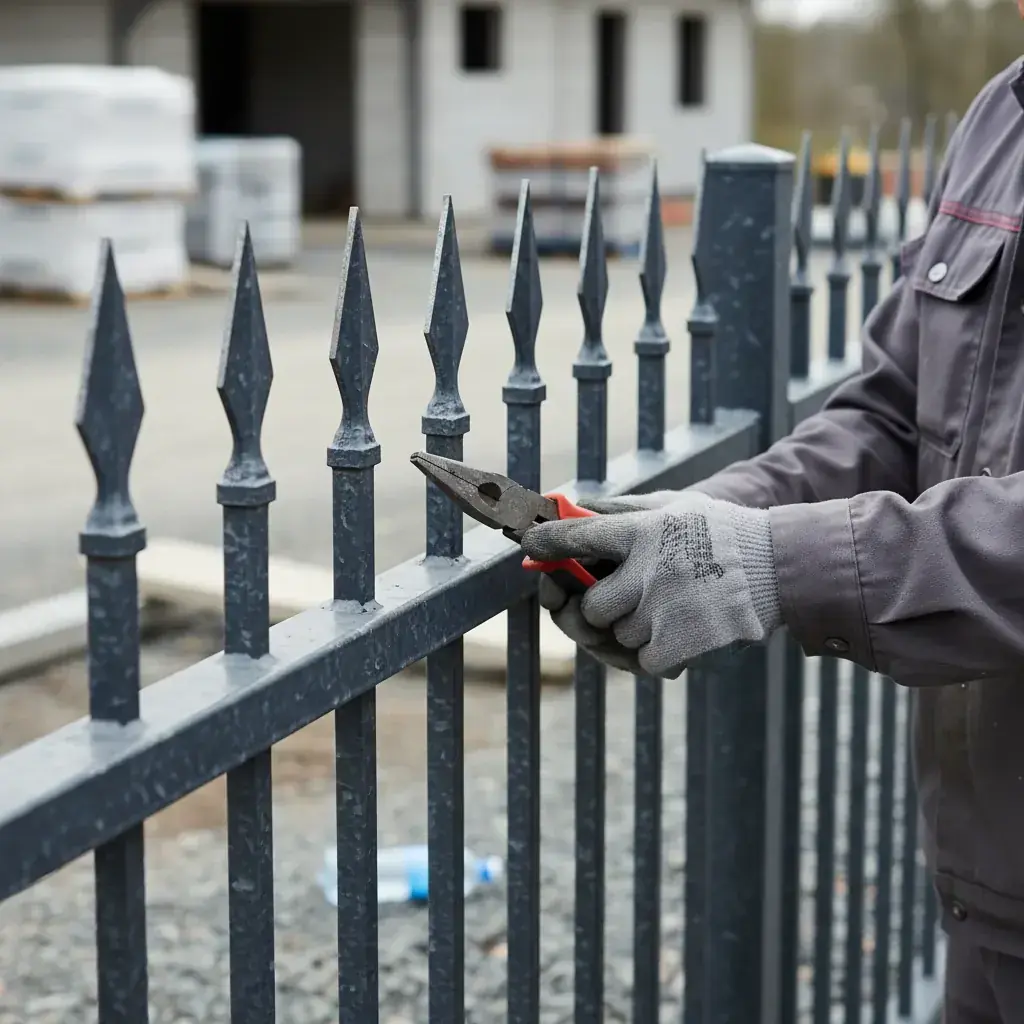
For most San Diego businesses, a commercial-grade steel or heavy-gauge chain link fence standing 8 feet tall is the most effective security fence, with installed costs typically ranging from $30 to $80 per linear foot depending on material and access control features. The right choice comes down to one question: do you need to deter intruders, manage who enters, or both? Matching the fence to that goal, and pairing it with an automated gate where needed, is what separates a real deterrent from a fence that just looks secure.
Matching fence type to your business needs (deterrence vs access control)
Before looking at materials, it’s critical to define the primary goal of your security fence. While most fences do a bit of both, your main objective will guide every other decision. Is your goal to discourage potential intruders from even considering your property, or is it to meticulously manage who can enter and exit?
The power of deterrence
Deterrence is about creating a visual and psychological barrier. This approach is ideal for properties that store high-value equipment, vehicles, or materials outdoors, like construction yards, logistics centers in Otay Mesa, or industrial lots. The fence itself sends a clear message: “This property is protected, and it’s not an easy target.”
Key features for a deterrence-focused fence include:
- Height: A tall fence (typically 8 feet or more) is inherently more intimidating and difficult to scale.
- Imposing materials: Heavy-gauge steel or industrial chain link look formidable and communicate strength.
- Anti-climb toppings: Features like barbed wire or pointed pickets (where local codes permit) make an attempt to breach the fence look painful and difficult.
The goal isn’t just to stop someone; it’s to make them look at your property and decide to go somewhere else.
The precision of access control
Access control is less about intimidation and more about management. This is the priority for businesses where you need to funnel all traffic, employees, clients, and deliveries, through specific, monitored entry points. Think of corporate campuses in Sorrento Valley, private medical facilities, or multi-tenant commercial buildings.
An access control strategy involves:
- A complete perimeter: The fence must fully enclose the property with no gaps, forcing everyone to use a designated gate.
- Integrated systems: The fence works in tandem with automated gates, key card readers, intercoms, and security cameras.
- Durability over appearance: While aesthetics matter, the fence must be strong enough to prevent someone from simply cutting through it to bypass the official entrance.
For most businesses, the optimal solution is a blend of both. A strong, tall fence provides deterrence, while a sophisticated gate system provides precise access control. Our experience with commercial fencing in San Diego helps us design systems that perfectly balance these two critical functions.
Anti-climb, steel, and commercial chain link options
Once you’ve defined your goals, you can choose the material that best achieves them. For commercial security, the field is generally narrowed to a few heavy-duty options, each with distinct advantages.
Commercial steel fencing
Steel is the top choice for security applications where both strength and aesthetics are important. Unlike residential ornamental iron, commercial-grade steel fences use thicker steel, more sturdy welds, and security-focused designs.
- Strength and Durability: Steel is incredibly difficult to cut or bend without serious tools and time. A high-quality powder coating protects it from rust and corrosion, even in San Diego’s salt-heavy coastal air.
- Anti-Climb Features: This is where steel truly shines as a commercial security fence. Pickets can be spaced closely together to prevent handholds. Most designs feature pressed-spear tops that are difficult and dangerous to grab. Some high-security options include curved tops that face outward, making scaling nearly impossible.
- Professional Appearance: An ornamental steel fence can secure a property without making it look like a fortress. It enhances curb appeal for office buildings, upscale retail centers, and corporate headquarters.
Commercial chain link fencing
Chain link is a practical and cost-effective solution for securing large perimeters. It’s important to distinguish between the thin, lightweight chain link found at hardware stores and true commercial-grade material.
- Heavy-Gauge Wire: Commercial chain link uses a much thicker gauge (9-gauge is common, 6-gauge for high security) that is significantly harder to cut.
- Galvanized or Vinyl-Coated: A galvanized finish (a zinc coating) provides excellent rust protection. For even longer life, especially near the coast, a vinyl coating over the galvanized wire offers a dual layer of defense.
- Enhanced Security Options: Standard chain link can be made more secure by adding privacy slats, which not only block the view of your assets but also make the fence harder to climb. For industrial or high-risk locations, adding barbed wire or razor wire to the top is an effective deterrent, though you must check local San Diego zoning codes for restrictions.
For a more detailed comparison of materials suitable for local businesses, our guide to choosing a fence for a San Diego business property offers further insights.
Integrating automated gates and access control systems
A high-security fence is ineffective if your gate is a weak link. An unlocked or easily bypassed gate undermines your entire investment. This is why integrating your fence with a sturdy automated gate and access control system is essential for a complete security solution.
The goal is to create a smooth system where the fence provides the static barrier and the gate provides controlled, secure access. This is where professional gate installation and automation becomes critical.
Automated gate types for San Diego businesses
- Sliding Gates: These are often the best choice for San Diego commercial properties. They don’t require the large swing radius of a swing gate, making them ideal for sloped driveways or sites with limited space. They are also generally more secure, as they are harder to force open.
- Swing Gates: A classic option that can work well if you have ample flat space for the gates to swing inward or outward without obstructing traffic or pedestrians. They can be single or double gates depending on the width of the opening.
Access control technologies
How you control your automated gate is just as important as the gate itself. Modern systems offer a range of options to fit your operational needs.
- Keypad and Card Readers: Simple and effective. Employees or tenants are given a code or an electronic key fob/card to gain access. This allows you to easily grant or revoke access without changing physical locks.
- Telephone Entry/Intercom Systems: Perfect for multi-tenant buildings or properties that receive frequent visitors or deliveries. A visitor can buzz a specific office or tenant, who can then grant them access remotely.
- Vehicle Sensors: “Exit loops” or other sensors embedded in the driveway can detect when a vehicle is approaching from inside the property and automatically open the gate for egress, ensuring a smooth flow of traffic out of the facility.
A well-designed commercial gate installation in San Diego combines the right physical gate with the right control technology to match your security protocol.
What San Diego commercial property managers need to know
For commercial property managers, selecting a security fence involves balancing security, budget, aesthetics, and local regulations. Getting any one of these wrong can lead to costly problems.
Navigating San Diego’s codes and permits
Fence regulations can be complex and vary by jurisdiction within San Diego County. Generally, fences in commercial zones have different height restrictions than residential ones. A fence over a certain height, often six or eight feet, depending on placement, will almost certainly require a permit. It’s crucial to work with a licensed contractor who understands the local requirements. They can help ensure your project complies with setback rules and material restrictions outlined by the San Diego County permitting authorities. Failing to secure the proper permits can result in fines and orders to remove the fence.
Liability and safety considerations
A secure perimeter is a major factor in reducing your liability. It demonstrates that you’ve taken reasonable steps to protect your property and the people on it. This can deter break-ins and vandalism, lowering the risk of insurance claims.
With automated gates, safety is paramount. Any professional installation must include safety features like photo-eye sensors (which stop the gate from closing if an object breaks the beam) and reversing edges. These are not optional; they are essential for preventing injury or property damage and protecting you from liability.
Long-term durability in our coastal climate
San Diego’s beautiful weather comes with a cost: sun and salt. UV rays can degrade certain materials, and the salty marine layer is highly corrosive to metal. Investing in materials designed for this environment is key to a fence that lasts.
- Powder-Coated Steel/Aluminum: This finish provides a thick, durable barrier that is far superior to simple paint.
- Heavy Galvanization (G-90): For chain link, a thicker zinc coating provides longer-lasting rust protection.
- Stainless Steel Hardware: Using stainless steel nuts, bolts, and fasteners prevents weak points from developing due to rust.
Choosing the right materials upfront costs more, but it saves you from expensive repairs and premature replacement down the road. An experienced local fencer will know exactly what materials hold up best from Chula Vista to Carlsbad.
Frequently asked questions
How much does a commercial security fence cost in San Diego?
Most San Diego businesses pay between $30 and $80 per linear foot installed, depending on material and height. Heavy-gauge chain link sits at the lower end of that range, while ornamental steel with anti-climb pickets and a powder-coat finish runs higher. Automated gate systems are priced separately and typically add $3,000 to $10,000 or more depending on gate type and access control technology.
What is the best security fence for a San Diego business?
Ornamental steel is the top choice when you need both security and a professional appearance, as its pressed-spear tops and tight picket spacing resist climbing without making your property look industrial. Heavy-gauge chain link is the better fit for large perimeters, storage yards, or any site where cost per linear foot is the deciding factor. Both materials hold up well in San Diego’s coastal climate when properly coated. See our commercial fence services for a full breakdown of what we install.
Do I need a permit for a commercial fence in San Diego?
Yes, in most cases. San Diego commercial fences over six to eight feet, depending on placement and jurisdiction, require a building permit before installation. Setback rules and material restrictions also vary by zone. Working with a licensed contractor ensures the design is code-compliant from the start and that permit applications are filed correctly, avoiding fines or removal orders later.
How do I make a chain link fence more secure for my business?
Start with a heavier gauge wire: 9-gauge is the commercial standard, and 6-gauge is used for high-security sites. Add privacy slats to block sightlines to stored assets and eliminate footholds for climbing. Top the fence with barbed wire or razor wire where local zoning allows. Pair the perimeter with a commercial-grade sliding gate and an access control system so every entry point is monitored. A chain link fence installation designed for security performs very differently from a standard residential version.
How long does a commercial security fence last in San Diego’s climate?
A properly specified steel or chain link fence should last 20 to 30 years with minimal maintenance in the San Diego area. The key is choosing corrosion-resistant finishes, including powder-coated steel or G-90 galvanized chain link with a vinyl overcoat, and stainless steel hardware at every connection point. The salt-heavy marine layer accelerates rust on bare or thinly coated metal, so the finish quality matters far more here than it would in an inland climate.
What type of automated gate works best for a commercial property?
Sliding gates are the most practical choice for the majority of San Diego commercial sites. They don’t need room to swing, work on sloped driveways, and are harder to force open than swing gates. Swing gates are a reasonable option when the driveway is flat and wide enough to accommodate the arc. Either type should be paired with photo-eye sensors and reversing edges, which are required safety features that also protect you from liability if a vehicle or person is struck during operation.
When to call us
Designing and installing a commercial security fence is a complex job that requires deep knowledge of materials, security principles, and local building codes. A poorly installed fence is a liability.
If you’re ready to secure your San Diego business property with a professionally designed and installed system, we’re here to help. Call us at (858) 925-5546 for a same-day estimate.