A backyard mesh project can serve three very different purposes. Garden protection, dog containment, and side-yard control each demand a different layout and gate plan.
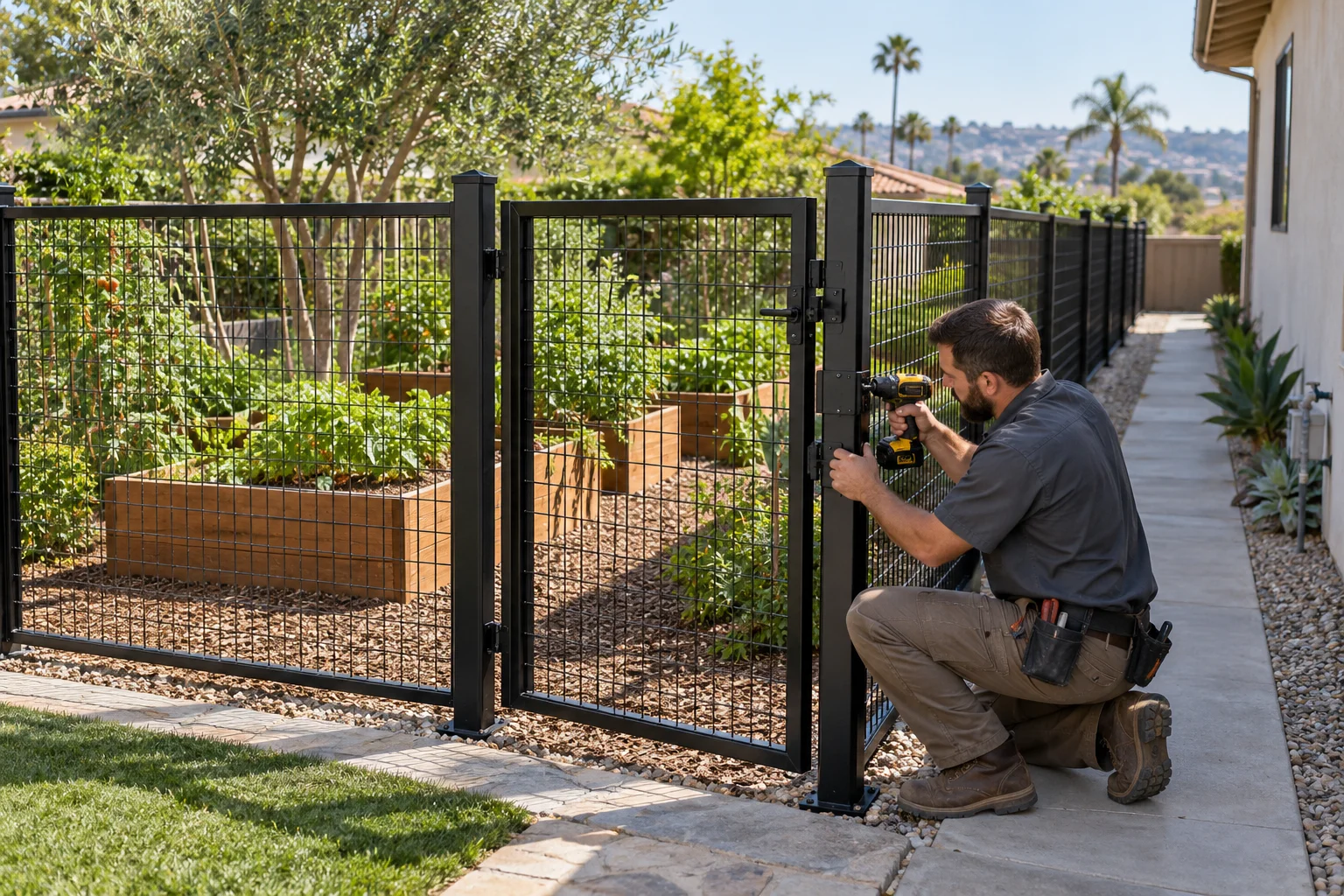
How residential wire mesh differs from chain link and farm welded fabric
“Wire mesh fence” describes a broad product family, not a finished specification. A contractor still needs to identify the mesh style, support system, finish, gate, and intended use.
Start with the appearance you want. Some mesh comes in flexible rolls. Other products come as more rigid sections. Openings may form squares, rectangles, or diamonds. Those differences affect the posts, fittings, and attachment method proposed by the contractor.
Chain link should appear as chain link on the quote. It shouldn’t be hidden under a general “mesh fencing” label. The same rule applies to welded wire products. Our residential welded wire guide examines that category in more detail.
Farm fabric also needs its own discussion. A product intended for a rural boundary may not match the look or access needs of a San Diego backyard. A residential garden enclosure often needs a finished gate, neat corners, and careful transitions near existing walls. A kennel or dog run places more attention on the bottom edge and every opening.
Don’t select from a distant product photo alone. Ask the contractor to bring a sample or identify the exact proposed product. The written description should match the sample.
Color matters too. Dark mesh can visually recede against plants. A metallic finish creates a different look. Neither choice replaces a written product description.
If the run borders a patio or entertaining area, compare visibility with privacy. A mesh fence keeps the area visually open. It doesn’t block views like a solid fence. That distinction should guide the first design decision.
Where garden beds, dog runs, and side yards change the plan
A garden wire mesh fence begins with what it must surround. Mark the planting area, irrigation access, pathways, and the route used for tools. A narrow opening may work for a person but frustrate routine garden work.
Place the gate where people already approach the beds. Check its swing against planters, slopes, walls, and stored equipment. If the garden layout may expand, discuss that before posts are placed. Our San Diego garden fence ideas offer more ways to organize the enclosure.
A wire mesh dog fence needs a pet-specific review. Tell the contractor the dog’s size, behavior, and habits. Point out where the dog runs, paws, pushes, or watches activity beyond the yard. The contractor can then recommend a suitable product and bottom-edge treatment.
Inspect every transition. A strong mesh field won’t solve an opening beside a wall, gate, or existing fence. Changes in grade also deserve attention. Ask how the proposed fence will follow the ground and what will happen beneath the gate.
A dog run also needs a practical cleaning route. Think about how people will enter, move supplies, and reach the full enclosure. The dog fence planning guide covers the broader containment decision.
Side yards create another set of constraints. Air-conditioning equipment, utility areas, storage, and walkway clearance can compete for limited space. Don’t let a gate block routine access. Identify anything that workers or residents must reach after installation.
Write the purpose of each run directly on the plan. “Garden boundary,” “dog enclosure,” and “side-yard gate” are clearer than one general label. That simple step helps each contractor price the same job.
What posts, gates, height, and grade details belong in writing
A useful proposal defines the complete fence, not only the mesh. It should identify the product, finish, posts, gate locations, attachment approach, and treatment at corners and transitions.
Ask for a simple plan showing each run. The drawing should mark gates and connections to existing features. It should also show where the fence changes direction or crosses a slope.
Post details belong in writing. Ask the contractor to identify the proposed post material, finish, spacing plan, and installation method. Don’t accept an assumption that every bidder will support the mesh the same way.
Gate descriptions need similar care. Record the location, swing direction, opening purpose, latch choice, and connection to nearby posts. A garden gate may serve hand tools. A side-yard gate may need to accommodate larger items. A dog enclosure needs a gate plan that reflects the animal and household routine.
Height must be explicit. Don’t rely on a sample photo or a casual conversation. The proposal should state the planned height for each separate run. If the ground changes, ask where that height will be measured and how the top line will respond.
Grade details often separate clear proposals from vague ones. Walk the line with each bidder. Mark high spots, low spots, steps, retaining features, and drainage paths. Ask how the mesh will meet the ground along each segment.
For attachment, the proposal should name the hardware or fastening system intended for that product. It should also explain connections at posts, gates, and existing structures. Follow the product manufacturer’s instructions and the contractor’s written installation plan. A generic attachment answer may not apply to every mesh system.
A detailed scope makes fence installation proposals easier to compare. It also reduces disputes about details that were never recorded.
When mesh, chain link, and a solid privacy run deserve separate quotes
One material doesn’t need to solve every yard problem. A mesh garden enclosure, chain-link utility run, and solid privacy section can be priced separately.
Start by dividing the property into functional zones. Mark where visibility is welcome. Then mark areas where screening matters more. A garden may benefit from an open boundary, while a patio edge may call for a solid run.
Separate quotes reveal the cost of each decision without relying on an unverified market average. No approved San Diego price, roll price, or per-foot rate was confirmed for this page. Ask contractors to price the same written dimensions and scope.
The quote should separate mesh, posts, gates, removal, transitions, and any other listed work. It should also say whether the proposal covers one continuous system or several distinct sections.
Don’t estimate a 200-foot project by multiplying an online roll price. That approach can omit posts, gates, hardware, grade changes, connections, and labor. Product quantities also need to follow the actual layout and the contractor’s installation plan.
Chain link deserves a separate quote when you’re seriously considering it. Ask for a clearly identified chain-link system rather than treating all open metal fencing as interchangeable. If privacy is the main goal, compare a solid option on the same plan. Our chain link versus wood comparison can help frame that choice.
Use identical gate locations and boundaries across bids. Otherwise, the totals won’t describe the same project. A lower figure may simply cover less work.
The customer contracts with and pays the independent contractor directly. Fence Pros San Diego doesn’t set contractor prices or product rates.
Which property questions need official confirmation for that address
Confirm the governing jurisdiction before choosing height or placement. A San Diego mailing address doesn’t always identify the authority that controls a parcel.
For property inside the City of San Diego, the current municipal code table lists fences below seven feet as not requiring a permit under that division. Fences seven feet or higher are listed for a Building Permit through Process One. That permit distinction doesn’t erase zoning, design, coastal, or property-specific requirements. Review the current City of San Diego municipal code and confirm the plan with the City.
The same City source contains separate rules for front, street-side, side, and rear yards. The correct treatment depends on location and fence design. Ask the City to confirm which yard category applies to the proposed line.
Unincorporated San Diego County uses separate guidance. County document PDS070, revised January 1, 2023, lists a permit exemption for fences or walls no higher than six feet when zoning compliant. Its zoning summary lists different limits for front, exterior-side, rear, and interior-side locations. Confirm that document’s current applicability with County Planning & Development Services before relying on it.
County PDS070 also addresses fire-resistive construction in wildland-urban interface areas. For its stated unincorporated scope, portions of fencing within five feet of a building must meet the document’s listed material standard. Ask the County whether that provision applies to the address and proposed product.
City properties in a Very High Fire Hazard Severity Zone may face separate Zone 0 requirements. The City’s published guidance contains specific treatment for fencing near structures. Confirm the parcel status and current enforcement requirements with the City.
Pool barriers require another review. California law contains enclosure requirements for covered residential pools, but a general yard fence isn’t automatically a compliant pool barrier. Ask the authority with jurisdiction to review the proposed enclosure and gates.
No separate local animal-containment rule was verified for this page. Contact the city responsible for the address, or County officials for unincorporated property, before treating a mesh plan as compliant.
If a contractor license applies, verify it through the California Contractors State License Board. A C-13 fencing contractor classification covers many fence and gate activities, but excludes masonry walls.
When to call us
Call when your wire mesh fence needs fixed gates, grade transitions, multiple materials, or official property checks. Call us at (858) 400-4906 and we’ll connect you with a licensed fence contractor.