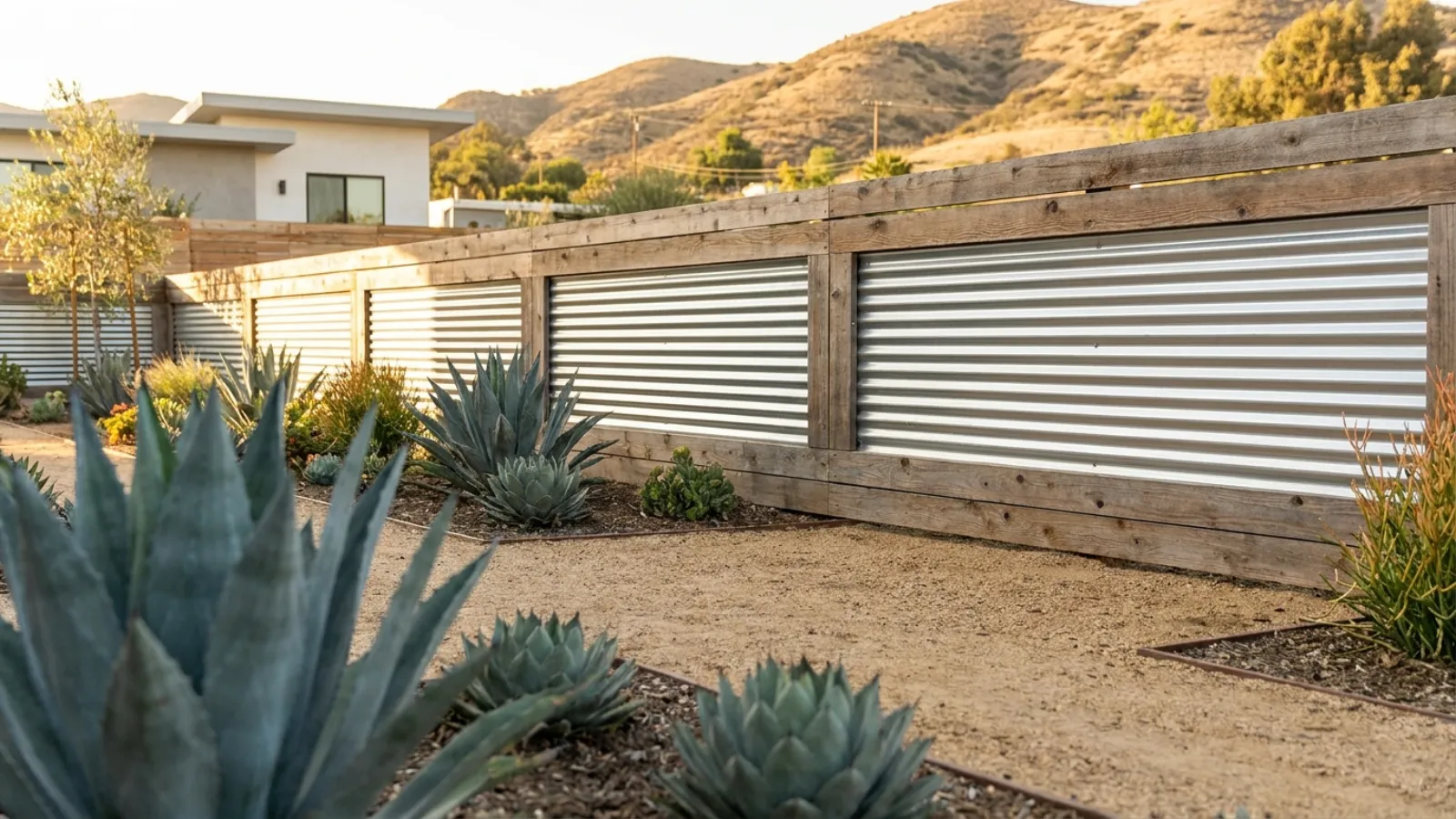
A corrugated metal fence uses ribbed metal panels, usually galvanized steel, weathering “Corten” steel, or aluminum, set into a wood or welded steel frame. In San Diego, expect roughly $30 to $60 per linear foot installed for the most common version, galvanized steel in a wood frame. Cost climbs for Corten and drops slightly for aluminum. Near the coast, cut edges and fasteners corrode faster than the panel face, so metal choice and hardware matter more than they do a few miles inland.

Here’s the full breakdown: what the panels are actually made of, what each style runs, how they hold up in salt air, and the height rules that cap what you can build without a variance.

What is a corrugated metal fence?

A corrugated metal fence uses ribbed metal sheeting, the same wave-pattern panel used on barns and industrial roofing, mounted as solid infill inside a frame. The frame is usually horizontal wood boards or a welded steel structure, with the corrugated panel filling in as the privacy layer.

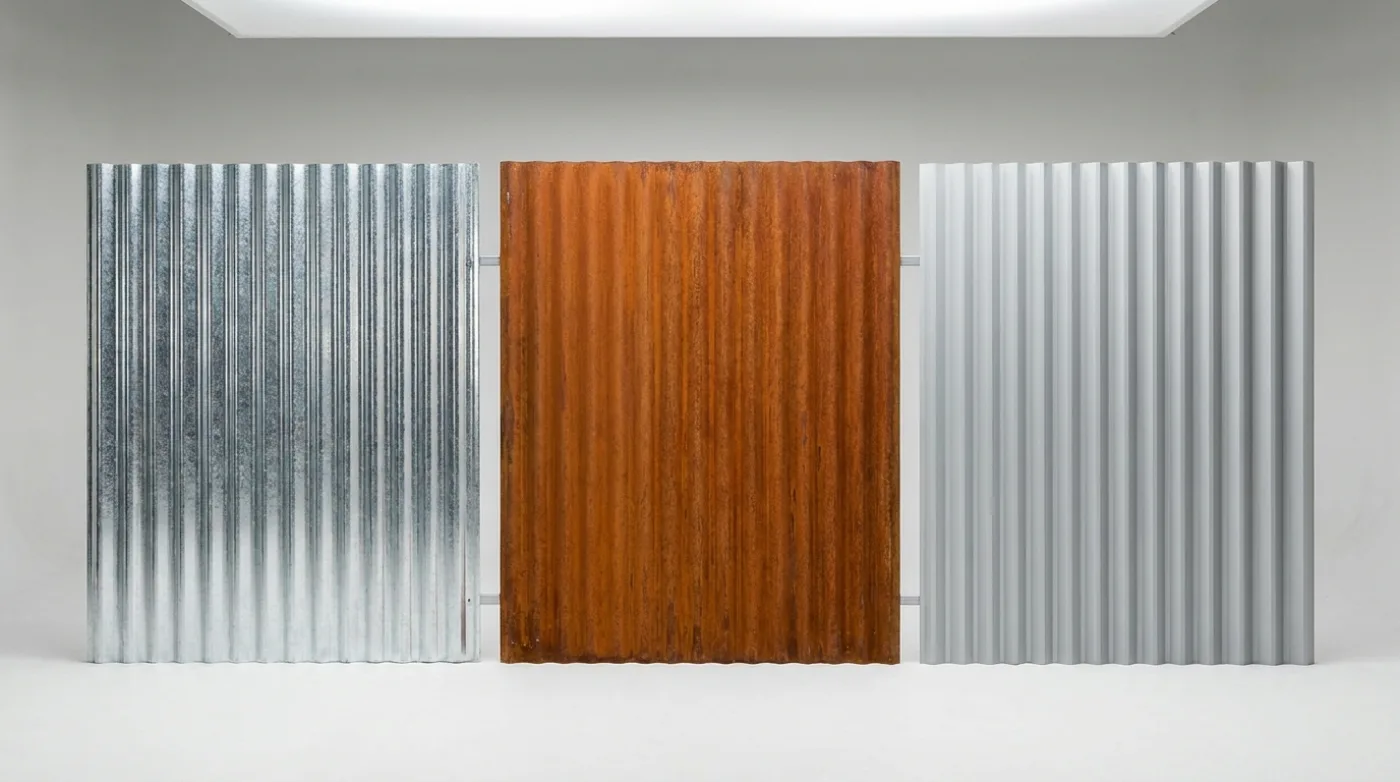
Three metals show up in San Diego builds. Galvanized steel is zinc-coated for rust resistance and is the least expensive option. Corten steel is designed to develop a stable rust-colored patina on purpose, which is the look most people picture when they say “corrugated metal fence.” Aluminum doesn’t rust at all and costs more than galvanized steel but less than most Corten installs.

Because the panel is solid, a corrugated metal fence delivers full privacy, unlike a spaced-slat or louvered design. For a broader look at metal fence types beyond the corrugated look, the metal fence guide covers wrought iron, aluminum picket, and chain link alongside this style.

How much does a corrugated metal fence cost in San Diego?

Expect $30 to $75 per linear foot installed, depending on the metal and frame. These are typical estimates, and actual pricing depends on linear footage, frame material, post condition, and the specific installer.

Galvanized corrugated steel, wood frame: $30 to $60 per linear foot installed. This is the standard configuration and the one most San Diego fence crews quote first. Wood framing keeps labor and material costs down compared to an all-steel structure.

Weathering Corten steel: $45 to $75 per linear foot installed. Corten costs more per sheet than galvanized steel and needs careful handling during installation, since the rust patina forming near stucco or concrete can leave staining if it’s not detailed correctly.

Corrugated aluminum: $35 to $65 per linear foot installed. Aluminum panels cost more than galvanized steel but come in ahead of Corten, and they skip the corrosion questions entirely.

Welded all-steel frame: Add roughly $10 to $20 per linear foot over a wood frame. A steel frame lasts longer and handles wind load better, but it’s a bigger labor job to weld and finish on site.

New posts or footings: $200 to $500 per post if the site needs new posts rather than reusing an existing structure. Coastal sand and inland decomposed granite call for different footing depths, which a local installer will size to the soil.

Does a corrugated metal fence rust near the San Diego coast?

Galvanized steel resists rust well, but the cut edges of each panel and the screws holding it in place corrode first, especially within a couple miles of the coast where salt air sits on everything. The zinc coating protects the flat face of the panel. It doesn’t fully protect a factory cut edge or a fastener head, and that’s where rust shows up first on a coastal install.

Corten steel is built to form a stable rust patina, and that’s the point of the material. In constant salt spray right on the coast, though, Corten keeps corroding past the point of a stable patina, and it can streak rust-colored runoff onto stucco, pavers, or concrete below it. Corten works better a few miles inland than it does directly on the water.

Aluminum doesn’t rust, full stop, which makes it the safest metal choice for a fence within sight of the ocean. It dents more easily than steel and costs more, but there’s no corrosion tradeoff to manage. For any of these metals, use stainless steel or hot-dip galvanized fasteners near the coast, not standard zinc-plated screws. The coastal fence hardware guide covers which fasteners and coatings actually hold up in salt air.

Corrugated metal fence styles and designs

The dominant look right now pairs horizontal wood framing with a corrugated steel or aluminum infill panel, which is what most people mean when they search for this style. It reads as modern without going full industrial, and it pairs well with drought-tolerant landscaping and desert-modern architecture.

A full metal frame, welded steel posts and rails around the corrugated infill, leans more industrial and works on properties with an already-modern or warehouse-style aesthetic. It costs more but needs less long-term maintenance than a wood frame.

Mixing horizontal wood slats with corrugated metal sections, alternating panels along the same fence line, is a popular way to break up a long run visually. For more on that combination and other current looks, see modern fence designs and horizontal fence design.
Because the corrugated panel is solid, this style is capped at 6 feet without a variance in most San Diego jurisdictions, the same limit that applies to any solid fence material. It’s a good match for xeriscape yards, desert-modern backyards, and properties that want full privacy without a traditional wood-plank look.

Side-by-side comparison of galvanized corrugated steel, weathering Corten steel, and corrugated aluminum fence panels

Permits, wind, and HOA rules in San Diego

Solid fences, corrugated metal included, are allowed up to 6 feet without a variance in the City of San Diego and most incorporated cities in the county. Go above 6 feet and the fence has to switch to an open design, meaning a percentage of the panel area lets air through. A solid corrugated panel doesn’t qualify, so a corrugated metal fence tops out at 6 feet unless you’re combining it with an open topper section above that line.

Solid metal panels catch a lot of wind, more than a picket or louvered fence of the same height, so posts and footings need to be sized for Santa Ana wind load, not just the panel weight. This is one of the more common places a corrugated metal fence fails if it’s installed by someone who treats it like a standard wood fence. See the Santa Ana wind fence preparedness post for what proper wind-rated footings look like, and fence permits in San Diego for the permit process itself.

If you’re in an HOA, get approval before ordering panels. Corrugated metal is a non-traditional material by most HOA standards, and boards that are fine with wood or vinyl sometimes balk at metal without seeing samples first. For general height thresholds across the county, San Diego fence height limits breaks it down by jurisdiction.

Frequently asked questions

Does a corrugated metal fence rust in San Diego?

Galvanized steel resists rust on the flat panel face but can corrode at cut edges and fastener points, especially close to the coast. Corten steel is designed to rust into a stable patina, though constant salt spray right on the water keeps it corroding past that point. Aluminum doesn’t rust at all and is the safest metal for a coastal install.

How much does a corrugated metal fence cost per foot?

Typical estimates run $30 to $60 per linear foot installed for galvanized steel in a wood frame, $45 to $75 for Corten, and $35 to $65 for aluminum. A welded all-steel frame adds roughly $10 to $20 per linear foot over a wood frame. Actual pricing depends on site access, post condition, and the installer.

How long does a corrugated metal fence last near the coast?

With hot-dip galvanized or stainless fasteners and a metal matched to the site, galvanized steel or aluminum can last 20 years or more even close to the water. Corten right on the coast will keep corroding rather than settling into a stable patina, which shortens its useful life compared to a few miles inland.

Can a corrugated metal fence be taller than 6 feet in San Diego?

Not as a solid panel. Solid fences are capped at 6 feet without a variance in most San Diego jurisdictions, and a corrugated metal panel counts as solid. Getting more height usually means pairing a 6-foot corrugated section with an open-design topper above it, which does qualify.

Is corrugated steel or aluminum better for a coastal fence?

Aluminum is the lower-risk choice directly on the coast, since it doesn’t corrode. Galvanized steel with quality fasteners holds up well a bit further inland and costs less. Corten is best saved for sites that aren’t in constant salt spray, where the patina can stabilize instead of continuing to corrode.

Do I need a permit for a corrugated metal fence in San Diego?

Yes, if the total height goes above 6 feet, and most cities also require a permit for new fence construction regardless of height once footings are involved. Check with your specific city, since permit thresholds and HOA rules vary. The fence permits in San Diego guide walks through the process.

When to call us

If a corrugated metal fence is on your shortlist, the coastal-distance question and the wood-versus-steel frame decision are worth talking through before ordering panels. Fence crews in the San Diego network handle fence installation in this style, and they can walk your property, confirm the right metal for your zone, and size the footings for wind before anything gets ordered.

We connect San Diego homeowners with local fence crews across the county, from Encinitas to Chula Vista. Free written estimates, fast callback. Call (858) 400-4906 or use the contact form on this page.