Fence work in Rancho Bernardo is City of San Diego work plus whatever association actually governs the tract. Westwood, Eastview, Oaks North, Bernardo Heights, Seven Oaks, Greens East, Bernardo Trails, and Westridge do not share one color or application. Neighboring 4S Ranch is a different community. Start with the exact association name and the fence line.
Fence Pros San Diego is a referral service, not a contractor. Independent professionals confirm scope and terms. We do not set prices or warrant workmanship.
This guide covers materials as proposal questions, CC&Rs, view versus good-neighbor segments, how to compare costs without a fake package price, City of San Diego permit notes, and how to vet a company.
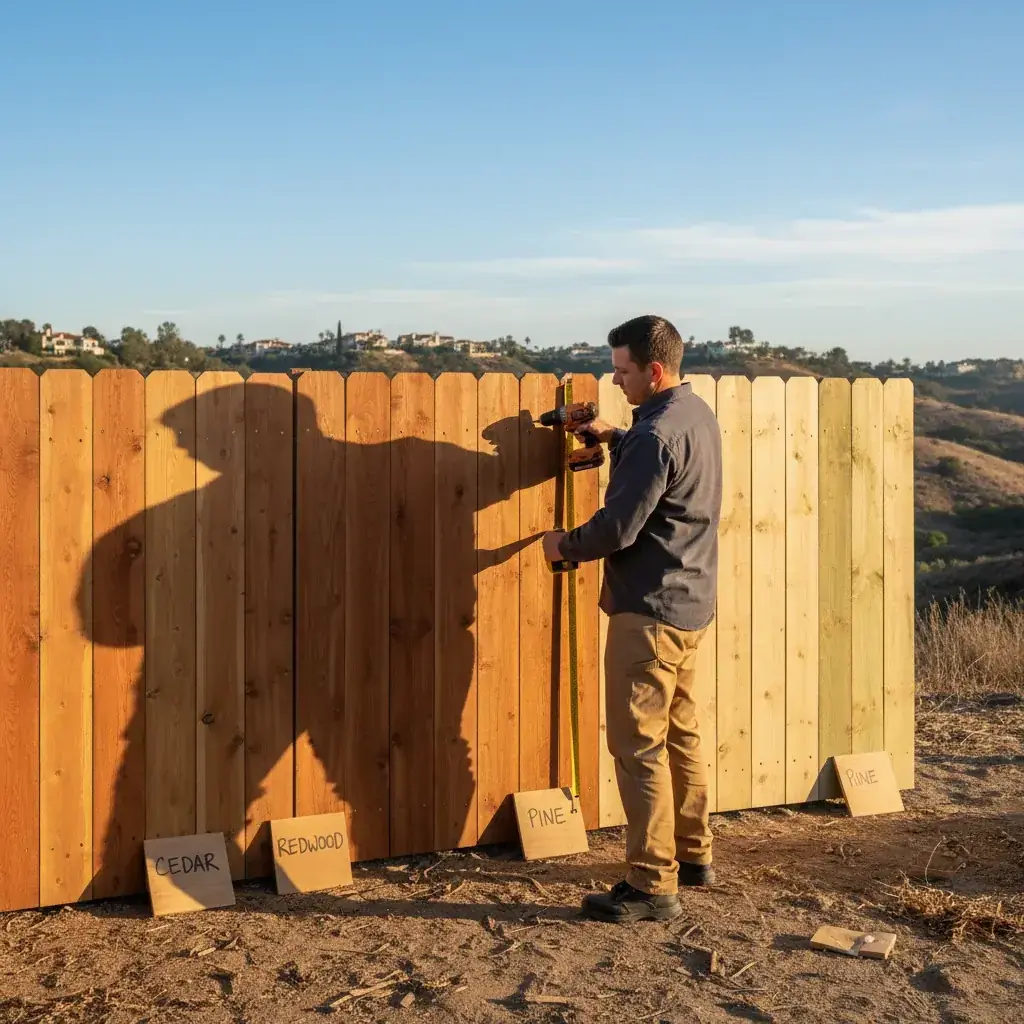
Fence materials for HOA lists and inland heat
Two forces decide the written spec: the association’s current approved-products list and the conditions on this lot. Inland sun and irrigation should be inspected, not converted into a 20-year wood lifespan or a claim that most original wood is expired.
Vinyl is common in replacement conversations because many associations list a color and profile. Ask for manufacturer, color name, texture, posts or steel cores, and gate parts. Tan or almond in one tract can be wrong in another. White in parts of Westwood or Bernardo Heights is a document question, not a community-wide rule. See vinyl fence cost for San Diego for how to read a vinyl bid, not a Rancho Bernardo rate.
Wood still appears where the tract allows it. Cedar and redwood need finish and fastener notes. Good-neighbor or board-on-board is often the neighbor-facing requirement. See what a good-neighbor fence is.
Ornamental aluminum shows up on view segments and some pool enclosures. For covered private single-family pool work, Health and Safety Code sections 115922 and 115923 address safety features and enclosure details. City, association, and contractor still confirm the layout. Do not treat a remembered 60-inch Building Code line as the whole statute.
Homes toward Lake Hodges, San Pasqual Valley, or Black Mountain open space need a separate fire, visibility, drainage, and access review. Confirm the parcel’s current designation with City of San Diego and the responsible fire authority. An open-space view does not prove one material ban. Do not paste County PDS 070’s 5-foot building-adjacent note onto a City lot unless that authority says it applies. Insurer rules are another track.
CC&Rs and HOA approval
Nearly every section may have architectural review. The Rancho Bernardo Community Council is not a substitute for the sub-association that issues the letter. Obtain the current application. Submit product, color, elevations, posts, gates, and neighbor-facing side. A color seen next door may be grandfathered.
A contractor who works these tracts can often prepare a packet. Fence Pros San Diego does not. Put that duty in the contract. Skipping approval can mean tear-out at your cost. See HOA fence approval in San Diego.
View fences and good-neighbor styles
View lots were often sold on sightlines. Many associations require a more open rear line toward Lake Hodges, the valley, or the hills, and a finished both-sides design on shared lines. Map three conditions if they exist: view fence on protected sightline runs, good-neighbor on shared lines, full privacy fence where the rules permit it. Quote after that map exists.
What fences cost in Rancho Bernardo
Replacement often means removing old wood and concrete footings. That is a quantity, not a packaged market total. For a 150-foot wood-to-vinyl replacement, compare demolition, old footings, named vinyl and color, reinforcement, gates, hardware, access, disposal, city review, and HOA work on the same endpoints. Do not add an assumed wildfire transition unless parcel review requires one.
Sloped lots need stepped or racked panels and separate corner and gate post notes. Those belong in the bid.
Start with fence installation or Rancho Bernardo fence service.
City of San Diego permits
Rancho Bernardo is inside the City of San Diego. Municipal Code Table 142-03A, as used on this site’s permit guide, does not require a building permit under that fence division for a fence less than 7 feet, and requires a building permit at 7 feet or greater. Zoning height, visibility triangles, setbacks, and overlays still apply. A shorter fence can still violate a front-yard or sight rule. Permit exemption is not design approval. See San Diego fence permits.
Useful order: confirm city height and setback for the zone, obtain HOA architectural approval, then build. The two tracks can move in parallel if the contract assigns both.
Choosing a fence company in Rancho Bernardo
Check C-13 or a proper B license at the CSLB. Ask which sub-HOA they think governs the tract, and verify against your documents. Get a written estimate listing materials, who files city and HOA paper, and who warrants what. We connect homeowners with independent companies. You still verify the license and sign their contract.
Frequently asked questions
Do I need HOA approval for a fence in Rancho Bernardo?
Many properties do. Use the exact association’s current documents. City compliance is separate.
What color and height fence does my tract require?
Only that association’s written standard. Height also has to satisfy City of San Diego zoning for the yard.
My house backs onto open space. Do fire rules apply?
Confirm with the City and the fire authority for this parcel. Do not assume a CalFire five-foot combustible ban from the neighborhood name.
How long does a Rancho Bernardo fence project take?
There is no supported three-to-five-day plus two-to-four-week formula. HOA calendars and city review dominate. Ask each office.
When to call us
Call (858) 400-4906 to connect with an independent licensed fence professional for Rancho Bernardo. Nearby in the Covenant, see choosing a fence company in Rancho Santa Fe.