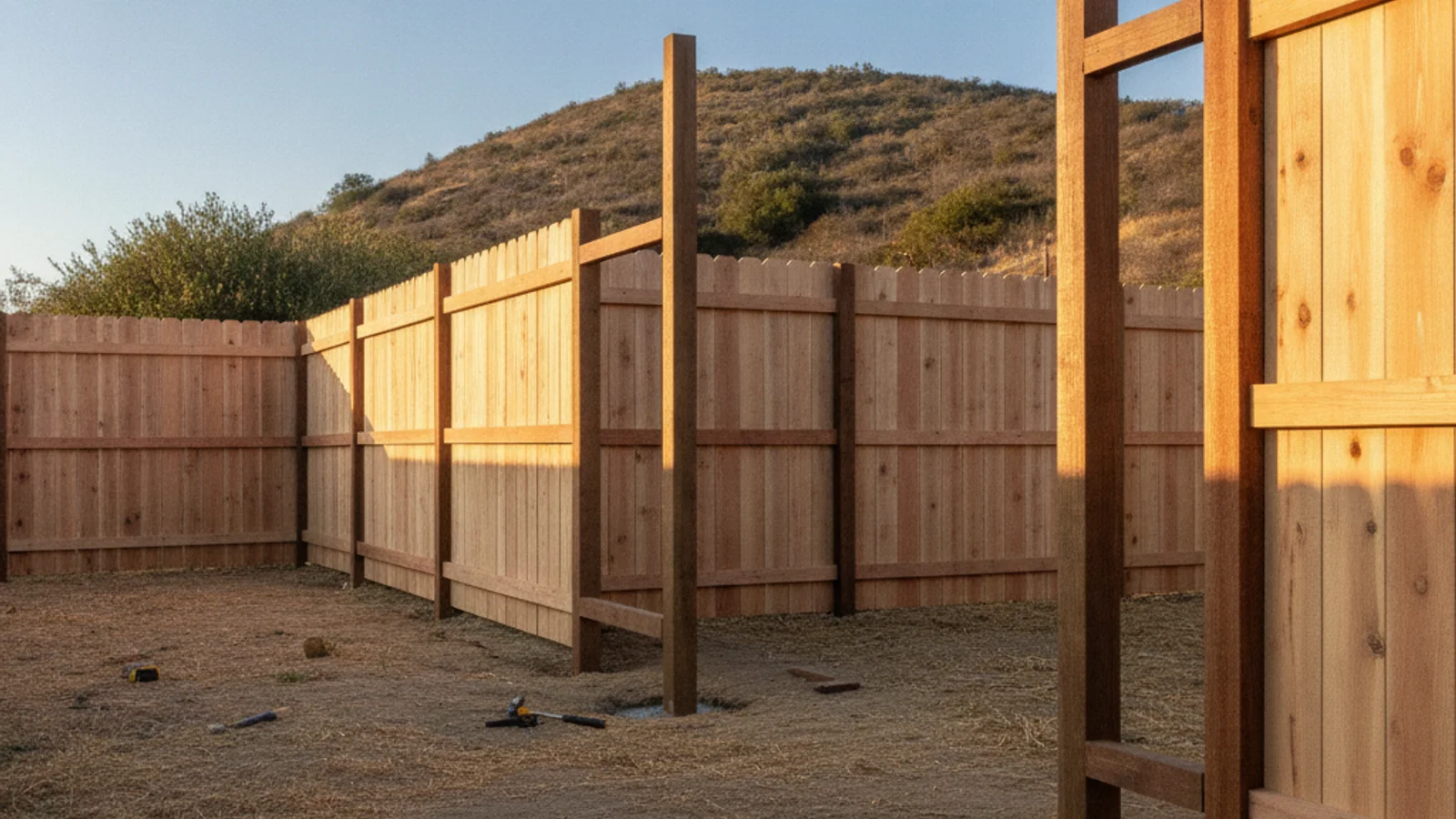
You can install a fence in San Diego at any point in the year, since the ground here never freezes the way it does in colder states. Even so, the best time to install a fence in San Diego is late spring (April through June) or early fall (September through October). Those windows combine dry, stable soil for setting posts, calmer wind than the fall Santa Ana season, and shorter installer lead times than peak summer. Winter isn’t off the table, but the January through March rainy season adds real scheduling risk. The right season depends less on comfort and more on soil, wind, and how busy every other homeowner in the county is that month.
TL;DR
- San Diego’s mild climate means fence installation is possible year-round, no frozen ground to wait out.
- Late spring (April to June) and early fall (September to October) are the sweet spots for dry soil, low wind, and faster scheduling.
- Winter’s rainy season (January to March) softens soil and slows concrete curing, which can push a project back days or weeks.
- Santa Ana wind season, roughly October through April and heaviest in fall, is the worst stretch for setting tall panels.
- Summer is peak demand season, so pricing and lead times both climb from June through August.
- Concrete needs dry, stable weather to cure properly, which is why installers avoid pouring footings during active rain.
- Booking 4 to 8 weeks ahead of your target season avoids the worst of the seasonal scheduling crunch.
Fence installation by season in San Diego
| Season | Months | Soil / weather | Installer demand & lead time | Verdict |
|---|---|---|---|---|
| Winter (rainy) | January to March | Wet, soft soil inland and in clay-heavy areas, slower concrete cure | Lower demand, shorter lead times, but weather delays common | Workable, plan for possible rain delays |
| Spring | April to June | Dry, stable soil, mild coastal breeze | Demand rising, moderate lead times | Best overall window |
| Summer | July to September | Dry, hard soil, minimal rain | Peak demand, longest lead times, highest pricing pressure | Workable, but book early and expect a premium |
| Fall | September to November | Dry early, Santa Ana wind risk builds through October | Demand easing after summer, lead times shortening | Great in September and early October, riskier late in the season |
These are general patterns, not guarantees. San Diego County spans coastal, inland, and East County microclimates that shift these windows by a few weeks in either direction.
Can you install a fence year-round in San Diego?
Yes, San Diego’s mild Mediterranean climate lets crews install fences in any month of the year, unlike frost-belt states where frozen ground stops post-hole digging for months. There’s no season where the ground itself becomes unworkable here. The trade-offs come from rain softening soil, wind making tall panels harder to set safely, and demand swings that affect scheduling and price, not from a hard stop the way winter freeze creates elsewhere. That’s the real answer to “when can I install a fence in San Diego”: basically anytime, with a few months that make the job easier.
What’s the best month to install a fence in San Diego?
May and October are typically the two strongest single months, sitting in the middle of the spring and fall sweet spots. May comes after the rainy season dries out and before Santa Ana wind risk or summer demand kick in. October still has workable dry soil and hasn’t yet hit the heaviest run of Santa Ana events, which cluster later in fall and into winter. Both months fall just outside the two demand peaks, summer vacation season and the pre-holiday scramble, so installer schedules tend to be more open.
Does San Diego’s rainy season delay fence installation?
Yes, San Diego’s rainy season, roughly January through March, is the most common source of installation delays. Wet soil is harder to dig cleanly, especially in the clay-heavy ground found in parts of Chula Vista and South Bay, where saturated clay swells and turns sticky rather than crumbling out. Concrete footings need dry, stable conditions to cure properly, so a footing rained on before it sets can end up weaker than one poured in dry weather. Most installers push a job back a few days after a storm or wait for a dry stretch before pouring. A fence can still go up in January, but the calendar gets less predictable, which matters if you have a hard deadline like a home sale or an HOA compliance date.
How does Santa Ana wind season affect fence installation?
Santa Ana wind season, generally October through April and heaviest in fall, makes it harder and riskier to set tall fence panels, especially solid privacy fencing. These offshore events push gusts of 40 to 50 mph through inland valleys and canyon corridors, and a tall panel not yet backfilled and cured acts like a sail. Installers often pause work on exposed lots when a Santa Ana event is forecast, both for crew safety and because a panel set in wind-loaded soil before the concrete cures can shift out of plumb. The Santa Ana wind fence preparedness guide covers which fence styles and post-setting methods hold up best once the wind arrives.
Is it cheaper to install a fence in the off-season?
Often, yes. Lower demand in the off-season, roughly November through February outside the holiday rush, usually means more installer availability and less upward pressure on quotes. Summer is the opposite: June through August is peak demand, so installers book out further and pricing tends to firm up. Off-season savings still need to be weighed against rainy-season delay risk, since a cheaper winter quote that slips two weeks because of storms isn’t automatically the better deal. The 2026 fence cost guide breaks down what drives San Diego fence pricing beyond timing.
How far ahead should you book a fence installer in San Diego?
Generally 4 to 8 weeks ahead of your target install month, and closer to 8 to 12 weeks for peak summer. Installer schedules fill fastest from late spring through summer, when demand is highest countywide. Booking early also gives more room to work around weather, since a rain delay in a packed summer schedule pushes a job back further than the same delay would in a quieter month.
Does the fence material change the best time to install?
Somewhat. Wood fencing is more sensitive to standing water or saturated ground, since wet lumber and wet post holes are a worse combination for long-term rot resistance. Vinyl and aluminum panels are less affected by soil moisture but still depend on dry conditions for the concrete footings anchoring their posts. Chain link, usually set with driven or concrete-set posts, is the most forgiving across seasons since there’s no solid panel surface catching wind. Whatever material you’re planning, fence installation follows the same seasonal logic: dry soil and calm wind make every step faster.
What if you need a fence installed urgently, regardless of season?
Most fence types can still go in outside the ideal windows, it just takes more planning around weather and wind forecasts. If a Santa Ana event or storm is coming, a good installer will work around it with a short delay or adjust the build sequence, digging and backfilling before a wind event rather than mid-project. Urgent installs are more common than people expect, whether it’s storm damage, a new pet, an HOA deadline, or a property sale. The storm damage fence guide covers what a faster, weather-driven timeline looks like.
Frequently asked questions
Is winter a bad time to install a fence in San Diego?
Winter isn’t bad outright, but it’s the least predictable season because of the January through March rainy season. Rain softens soil and delays concrete curing, pushing timelines back in a way summer and fall rarely see. Spring or fall is usually smoother, but a winter install is still doable with a little buffer built in.
Can a fence be installed in one day?
Smaller projects, short runs or simple panel replacements, sometimes finish in a single day, but most full-yard privacy fence installs run 1 to 3 days depending on length, material, and gate count. Concrete curing can stretch the timeline further, since posts typically need a day or more before panels attach under full load.
Do you need a permit before scheduling a fence installation?
It depends on fence height and jurisdiction within San Diego County, since permit rules vary by city. Settle the permit question before booking an installer to avoid a schedule conflict later. The San Diego fence permit guide covers height thresholds and when a permit applies.
Does a sloped yard change the best time to install?
It can. Sloped and hillside lots are more sensitive to saturated soil during the rainy season, since wet slopes shift and erode more than flat ground. A dry-season install adds a margin of safety on top of the design considerations in the guide to fencing on a sloped San Diego yard.
Is coastal San Diego different from inland San Diego for fence timing?
Somewhat. Coastal areas see a more consistent marine layer and milder swings, while inland and East County zones get hotter summers, stronger Santa Ana exposure, and soil with more decomposed granite and clay. Inland properties have more reason to avoid peak Santa Ana season for tall panel installs.
What’s the single best piece of timing advice for a San Diego fence project?
Book in April, May, September, or October if your schedule allows it, and book several weeks ahead regardless of season. Those months balance dry soil, manageable wind, and installer availability better than any other stretch of the year.
When to book your fence installation
Timing a fence project requires balancing site conditions, material needs, and the selected contractor’s schedule. Fence Pros San Diego is a referral service that connects San Diego County homeowners with licensed independent fence contractors. Ask the contractor who evaluates your property how weather, ground conditions, material availability, and permit requirements affect the proposed schedule.