A sprinkler damage fence post concern often starts with damp soil that returns after watering. That pattern deserves attention, but it doesn’t prove the irrigation caused structural damage. Document what’s happening, then let each trade assess its own part.
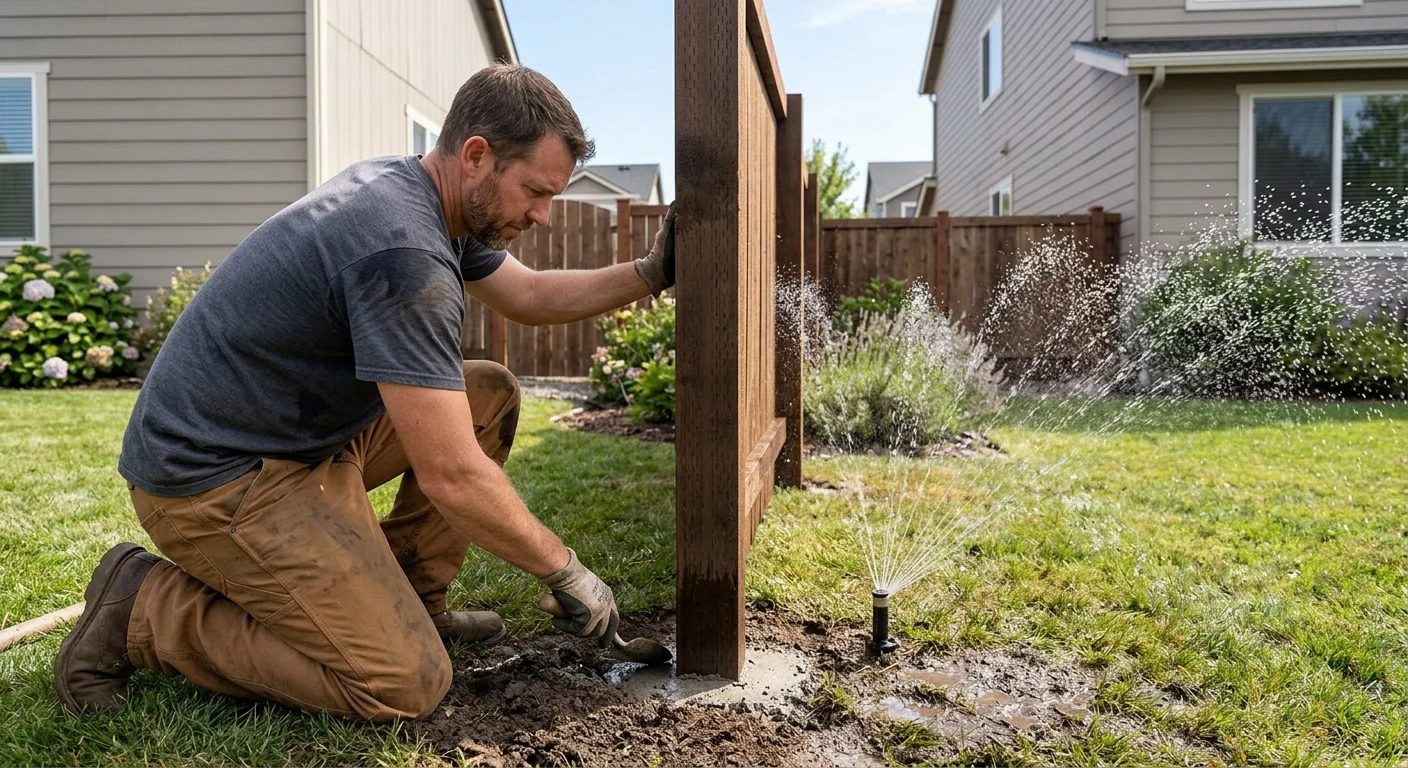
How to document moisture patterns without disturbing the footing
Start by recording the area as you found it. Don’t dig around the post, remove concrete, or pry against the fence. Those changes can hide the original moisture pattern and make the first inspection less useful.
Take a wide photo showing the post, sprinkler, fence line, and surrounding yard. Then photograph the post base from several angles. Include the visible edge of the footing, if there is one. Capture darkened material, standing water, exposed soil, staining, or surface changes without labeling them as damage.
Watch the area during its normal irrigation cycle. Note where the water begins and where it travels. The post may receive direct spray, runoff from a slope, or water moving along the fence line. If the sprinkler isn’t running when a professional visits, a short video can preserve that pattern.
Write down the date, watering zone, and visible conditions. Note whether the soil was already wet before irrigation began. Check again later and record what changed. You’re building a timeline, not trying to diagnose the cause.
Compare the affected post with another nearby post outside the wet area. Photograph both from similar distances. Differences can help a professional choose where to inspect, though they don’t establish why one post looks different.
San Diego County properties vary widely in yard layout. A narrow City Heights side yard may offer a different view than an open lot near El Cajon or Oceanside. Clear photos help when access, planting, walls, or neighboring property limits the inspection angle.
What a fence pro checks on the post, footing, and nearby rails
A fence professional starts with the fence itself. The inspection should distinguish visible wetness from confirmed loss of support. Those aren’t the same finding.
At the post, the pro may examine alignment, surface condition, movement, and the connection with the footing. The post material matters because wood, vinyl, and metal assemblies have different components. The goal is to identify what’s affected without assuming irrigation is responsible.
The visible footing also needs context. A fence pro can check whether it appears displaced, separated, exposed, or surrounded by changed soil. If more investigation is needed, the contractor can explain what must be accessed and why. Our guide to repairing fence post footings in San Diego explains how footing concerns fit into a broader post assessment.
Nearby rails and panels deserve attention too. A post can look like the only problem while connected sections show misalignment, loose connections, or uneven gaps. The pro should follow the fence line in both directions and compare the affected area with neighboring sections.
Movement should be documented before anyone assigns a cause. Note whether the post moves by itself or whether a longer section shifts together. If the fence is leaning, compare the symptoms with this guide to diagnosing a leaning fence.
Ask for findings in plain language. The contractor should identify what was observed, what remains uncertain, and which fence components need attention. If the issue appears limited to one support, a fence post repair assessment can keep the discussion focused.
How irrigation and fence pros divide the diagnosis
This problem sits between two trades. The irrigation professional evaluates the water source and delivery pattern. The fence professional evaluates the post, footing, rails, and attached fence sections.
An irrigation professional can inspect sprinkler placement, spray direction, connections, and water movement through the landscaped area. That person can explain whether irrigation work is recommended. The fence pro shouldn’t be expected to design that correction unless it falls within the contractor’s separate qualifications and quoted scope.
Likewise, an irrigation inspection doesn’t establish the condition of a fence footing. The irrigation professional can document where water reaches the post. A fence contractor should decide whether the post or connected fence needs repair.
Give both professionals the same photos, notes, and video. Mark the sprinkler or irrigation zone involved. Point out any changes in landscaping, watering patterns, or fence movement, but separate observations from conclusions. “The soil becomes wet here” is useful. “This sprinkler ruined the footing” goes beyond what has been confirmed.
A clean handoff includes three questions:
- Where is the water coming from?
- Which fence components show a confirmed problem?
- Should irrigation work happen before, after, or independently of fence work?
The answers may require coordination between the independent professionals. Ask each one to define the limits of the proposed work. That reduces the chance that both quotes assume someone else will handle the same unresolved condition.
Fence Pros San Diego is a referral service serving San Diego County. We connect homeowners with licensed, independent fence contractors. Irrigation work remains a separate discussion with the appropriate professional.
When rerouting, repair, or replacement each deserves a quote
Rerouting deserves consideration when an irrigation professional identifies a water-delivery issue near the post. That quote should describe the irrigation work alone. It shouldn’t promise that changing the water pattern will correct an existing fence condition.
A fence repair quote makes sense when the contractor identifies a limited problem with the post, footing, rail connection, or nearby section. Ask what will remain in place and what will be removed. The quote should also state whether the irrigation concern must be addressed before fence work begins.
Replacement deserves its own comparison when the fence pro finds that a limited repair isn’t the preferred scope. That may mean replacing a post, an attached section, or a broader run. The contractor should explain which parts are included rather than using “replacement” as a vague label.
Sometimes the fence and irrigation systems both need separate proposals. Keep those proposals distinct, even if the work must be coordinated. Fence Pros San Diego doesn’t set contractor prices, irrigation prices, or warranty terms. No approved market figure is available here for this exact combined situation, so request written details from each independent professional.
For broader damage involving rails or panels, compare the post-specific scope with a general fence repair assessment. Ask each fence contractor to identify:
- The observed condition
- The components included in the quote
- Work excluded from the quote
- Any irrigation work expected beforehand
- How unexpected conditions would be discussed
- Who is responsible for cleanup and restoration
You can verify a contractor through the California Contractors State License Board license check. Fence Pros San Diego matches customers with licensed independent fence professionals, but the customer contracts with and pays the contractor directly.
What photos help both pros assess the affected area
Useful photos show relationships. A close-up of damp soil alone doesn’t reveal where the sprinkler sits, how the fence connects, or where water travels. Build a short visual sequence instead.
Begin with a wide view from inside the yard. Include the fence line, affected post, landscaping, and irrigation head when visible. Take another wide view along the fence so alignment can be compared across several sections.
Next, photograph the post base from the front and both sides. Include the transition between the post, visible footing, and soil. Don’t scrape away material for a clearer image. The undisturbed surface is part of the record.
Add close views of rail-to-post connections. Photograph panels, brackets, fasteners, or gaps that appear different from nearby sections. Then take matching photos of an unaffected neighboring post. That comparison helps the fence pro see whether the concern appears isolated.
Capture the irrigation pattern with a short video. Start wide enough to show the sprinkler’s location. Keep the affected post in the same frame when possible. Follow visible runoff toward or away from the footing without stepping into the spray area and changing the scene.
Your photo set should include:
- The full affected fence section
- The post base from several angles
- The visible footing edge
- Each nearby rail connection
- The sprinkler or irrigation outlet
- The water path during operation
- A comparison post nearby
- Landscaping or walls that limit access
Label the files with simple descriptions. Include the observation date and whether irrigation was running. If the property is in Chula Vista, National City, San Diego, or another county community, include the correct location when requesting a referral. Don’t rely on a broad “San Diego” label if the actual city is known.
Good documentation won’t replace an inspection. It gives both professionals a shared starting point and helps them discuss separate scopes without guessing.
When to call us
Call when a fence post moves, leans, separates from nearby rails, or needs a professional condition assessment. We’ll match you with a licensed, independent fence pro who can examine the fence and explain the proposed scope. Call us at (858) 400-4906 and we’ll connect you with a licensed fence contractor.