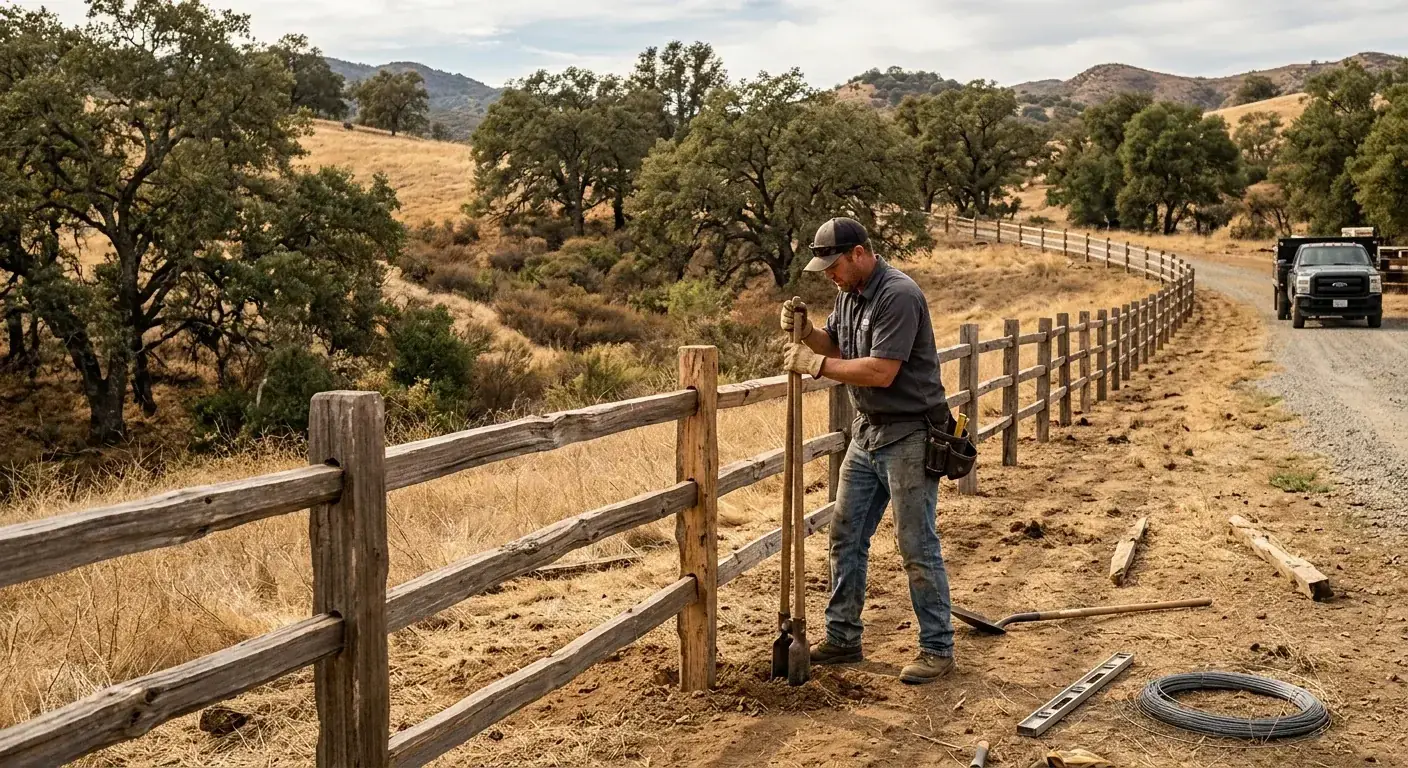
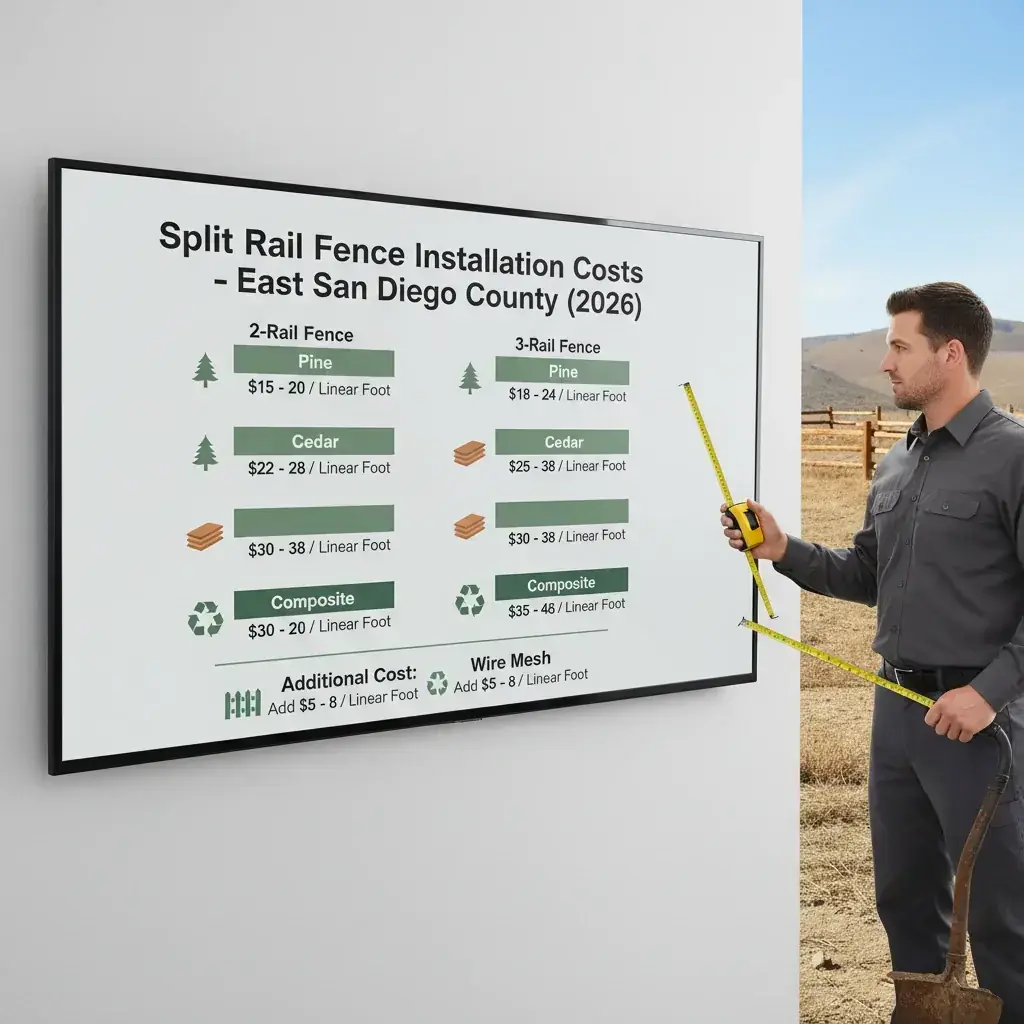
A split rail fence costs roughly $12 to $25 per linear foot installed in San Diego’s East County, making it one of the most affordable ways to define large rural properties in areas like Ramona, Alpine, and Valley Center. It’s the right call when you want clear boundary lines and a natural look without blocking views or spending what a privacy fence would run. Add wire mesh for another $3 to $8 per foot and it doubles as livestock or pet containment. This guide covers materials, costs, and when a split rail fence is (and isn’t) the best fit for your land.
When to choose a split rail fence for your property
A split rail fence is a distinctly American classic, known for its rustic look and straightforward construction. It’s an excellent option for property owners in San Diego County who appreciate open vistas and a natural aesthetic. Unlike solid panel fences, split rail designs don’t obstruct views, letting the natural landscape – whether it’s rolling hills, groves of oak trees, or distant mountains – remain a prominent feature. This makes them particularly popular in communities such as Ramona, where homeowners often prioritize preserving a wide-open feel.
One of the primary reasons to opt for a split rail fence is its cost-effectiveness, especially for long stretches of property. When you’re defining many acres, the material and installation costs of solid fences can quickly become prohibitive. Split rail offers a durable, attractive way to mark boundaries without breaking the bank. It serves as a clear visual perimeter for your land, signaling property lines to visitors and passersby. For those in Alpine with expansive yards or a horse property, it sets a welcoming tone without creating a visual barrier.
Beyond aesthetics and cost, split rail fences are incredibly versatile. They adapt well to varied terrain, gracefully following the contours of hills and valleys without requiring extensive land grading. This is a huge benefit in the often-undulating landscapes of East County San Diego. While they don’t offer full privacy or security, they are effective at semi-containing larger animals, such as horses, when paired with additional measures. They can also deter larger wildlife from entering your garden, or simply add a decorative element to the front of your property, enhancing its curb appeal with a timeless look.
Material options: cedar, pine, and composite rails
When you’re considering a split rail fence for your San Diego property, the material you choose plays a big role in its appearance, longevity, and maintenance needs. The most common options are natural wood, typically cedar or pine, and increasingly, composite materials. Each offers distinct advantages and considerations, especially in San Diego’s diverse climate, which can range from dry, hot summers to occasional heavy rains.
Cedar split rail fences
Cedar is a top choice for wood fence ranch fencing due to its natural durability and resistance to rot, decay, and insect infestation. Its inherent oils make it an excellent material for outdoor use, standing up well to the San Diego sun and occasional moisture. Cedar also weathers beautifully, developing a lovely silver-gray patina over time if left untreated, which many rural property owners find appealing. It has a rich, warm color when first installed. While cedar typically comes with a higher upfront cost than pine, its longer lifespan and lower maintenance requirements often make it a wise long-term investment. For properties in areas like Valley Center, where rustic beauty is key, cedar provides that authentic look with lasting performance.
Pine split rail fences
Pine is generally the most economical option for a wood ranch fencing project. It’s readily available and offers a classic split rail aesthetic. However, pine is naturally less resistant to decay and insects than cedar. To ensure its longevity in San Diego’s climate, pine split rails usually require pressure treatment, staining, or sealing. Without proper treatment and ongoing maintenance, pine fences can succumb to rot or insect damage more quickly. If budget is a primary concern, treated pine is a viable option, but be prepared for a shorter lifespan compared to cedar or composite, and plan for regular care to protect your investment. Pine still delivers the iconic look of a split rail fence, making it a popular choice for larger, more budget-conscious projects.
Composite split rail fences
For those seeking the look of a split rail fence with minimal maintenance, composite materials are an innovative solution. Made from recycled plastics and wood fibers, composite rails offer exceptional durability, resisting rot, insects, and splintering. They come in consistent colors and textures, meaning you won’t need to stain or paint them, and they won’t fade or warp significantly over time. While the initial investment for composite is often higher than even cedar, the near-zero maintenance saves time and money in the long run. It’s an environmentally friendly choice, as it repurposes materials, and it offers a clean, uniform appearance that can suit both traditional and more contemporary rural aesthetics. For homeowners in areas like Alpine who want a rustic fence without the upkeep, composite split rail fence installation is an increasingly appealing option.
Adding wire mesh for pet and livestock containment
While a traditional split rail fence excels at defining boundaries and enhancing rustic appeal, its open design isn’t effective for containing smaller animals or fully securing livestock. This is where adding wire mesh becomes a game-changer for many San Diego property owners, particularly those with pets, horses, or other animals. Integrating wire mesh transforms a purely aesthetic fence into a functional barrier, offering peace of mind and greater control over your property.
Benefits of adding mesh
The primary benefit of adding wire mesh is containment. For dog owners in Ramona, mesh prevents pets from easily slipping through the wide gaps between rails. For properties with horses, goats, or other livestock, a well-chosen mesh provides the necessary security to keep animals safely within their pastures, preventing them from straying or getting into dangerous situations. This is a core part of any farm fence in San Diego. It also helps protect your property from unwanted wildlife, deterring small predators or animals that might damage gardens or crops. This added layer of protection doesn’t detract from the split rail’s rustic charm; in fact, it often enhances its practicality, making it a truly versatile choice for a horse property fence in San Diego County.
Types of wire mesh for split rail fences
When selecting wire mesh, you have several options, each with different strengths and applications.
- Welded wire mesh is strong and rigid, available in various gauges and opening sizes. It’s excellent for keeping in medium-sized dogs or deterring larger wildlife.
- Woven wire mesh (also known as field fence or ranch fence) is more flexible and can conform better to uneven terrain. It’s often used for livestock as it can handle impact better without breaking.
- No-climb mesh features smaller, closer-knit openings, specifically designed to prevent animals from getting their hooves caught or climbing through, making it ideal for horses.
- Galvanized or vinyl-coated mesh offers added protection against rust and corrosion, crucial for longevity in outdoor conditions.
Installation considerations
Attaching wire mesh to a split rail fence requires careful planning. The mesh is typically fastened to the inside face of the posts and rails using staples, zip ties, or specialized fence clips. It’s important to ensure the mesh is taut and securely attached along its entire length to prevent sagging and gaps that animals could exploit. The height of the mesh should correspond to the animals you’re containing; a taller mesh is needed for horses or larger dogs, while a shorter one might suffice for small pets or garden protection. Proper installation ensures the mesh functions effectively without compromising the fence’s structural integrity or its visual appeal. It’s a specialized process that ensures both containment and durability.
Cost of installing a split rail fence in East County
Understanding the cost of installing a split rail fence in San Diego’s East County is crucial for budgeting your project. Several factors directly influence the overall price, making it important to consider your specific needs and property characteristics. While split rail is generally a more affordable option for extensive fencing compared to privacy fences, the final quote will depend on material choices, the fence’s design, and the complexities of your landscape.
Key cost factors
- Material: As discussed, pine is the most budget-friendly, followed by cedar, with composite being the highest upfront investment. The quality of the wood (e.g., knot-free cedar vs. standard grade) also plays a role.
- Number of Rails: Split rail fences typically come in 2-rail or 3-rail configurations. A 3-rail fence uses more material and labor, increasing the cost per linear foot, but offers a more sturdy barrier and a different aesthetic.
- Linear Footage: The total length of the fence is the most significant cost driver. Larger properties in areas like Ramona or Alpine naturally require more materials and labor.
- Wire Mesh Addition: Including wire mesh for containment adds to both material and installation costs. The type and gauge of mesh chosen will impact the price.
- Terrain and Accessibility: Uneven terrain, rocky soil, or limited access for equipment can increase labor time and complexity, thus raising installation costs.
- Installation Method: While DIY is an option for some, professional fence installation ensures proper post setting, alignment, and durability, preventing costly repairs down the line.
For East County residents in areas such as Julian, Descanso, or Pala, local conditions and specific property requirements can influence bids. For instance, digging post holes in very rocky soil might incur additional charges. Typically, costs are calculated per linear foot, encompassing materials and labor. When working with Fence Pros San Diego, we provide transparent estimates tailored to your property, helping you understand where your investment goes.
We recommend obtaining a detailed estimate that breaks down material costs, labor, and any additional services like old fence removal or site preparation. This will give you a clear picture of your total investment for a durable and attractive split rail fence.
Frequently asked questions
How much does a split rail fence cost per linear foot in San Diego?
Split rail fence installation in San Diego’s East County typically runs $12 to $25 per linear foot, materials and labor included. A 2-rail pine fence sits at the lower end, while 3-rail cedar or composite will push toward the higher end. Rocky terrain in areas like Julian or Descanso can add to labor costs.
Is a split rail fence a good fit for horse properties in Ramona or Alpine?
A split rail fence works well as a visual boundary on horse properties, but horses need additional containment. Pairing the rails with no-climb wire mesh is the standard approach. The mesh prevents hooves from getting caught and keeps horses from leaning through the gaps, and it doesn’t significantly change the fence’s rustic look.
How long does a cedar split rail fence last in San Diego’s climate?
A cedar split rail fence typically lasts 15 to 25 years in San Diego County with minimal maintenance. Cedar’s natural oils resist rot and insects well, and the dry East County climate is favorable compared to coastal salt air. Leaving it untreated lets it weather to a silver-gray patina; a penetrating oil sealer every few years extends the life further.
Does San Diego County require a permit for a split rail fence?
Most residential split rail fences under 6 feet tall do not require a building permit in unincorporated San Diego County, but rules vary by city and zoning. If your property is in a special fire zone, agricultural zone, or near a waterway, check with the county or your city’s planning department before you install. A local fence installation contractor familiar with East County requirements can confirm what applies to your parcel.
What’s the difference between a 2-rail and 3-rail split rail fence?
A 2-rail fence has one post on each end and one middle post, with two horizontal rails running between them. It’s lighter, less expensive, and suits properties where you want a decorative boundary. A 3-rail fence adds a third rail, making it sturdier and better at containing larger animals or deterring them from crossing. For horse properties, 3-rail with wire mesh is the more common choice.
Can I add wire mesh to an existing split rail fence?
Yes. Wire mesh can be retrofitted to an existing split rail fence as long as the posts are still solid and the rails are in good condition. A crew staples or clips the mesh along the interior face, tensioning it from post to post. If the existing fence has significant rot or loose posts, it’s usually worth replacing those sections first so the mesh has a sound structure to attach to.
When to call us
When you’re ready to enhance your rural San Diego property with the classic beauty and practical function of a split rail fence, it’s time to connect with local professionals. Our team understands the unique needs of properties in Ramona, Alpine, Valley Center, and throughout East County. We ensure your fence is installed correctly, efficiently, and to last, handling everything from material selection to proper post setting. Call us at (858) 925-5546 for a same-day estimate.