A vinyl run that looked even last spring can show a yellow band, a gray film, or a rusty smear by fall. That shift shows up across San Diego County, especially on west-facing panels and fence lines that catch irrigation. A licensed fence pro maps vinyl fence discoloration as a pattern, not a guess from color alone.
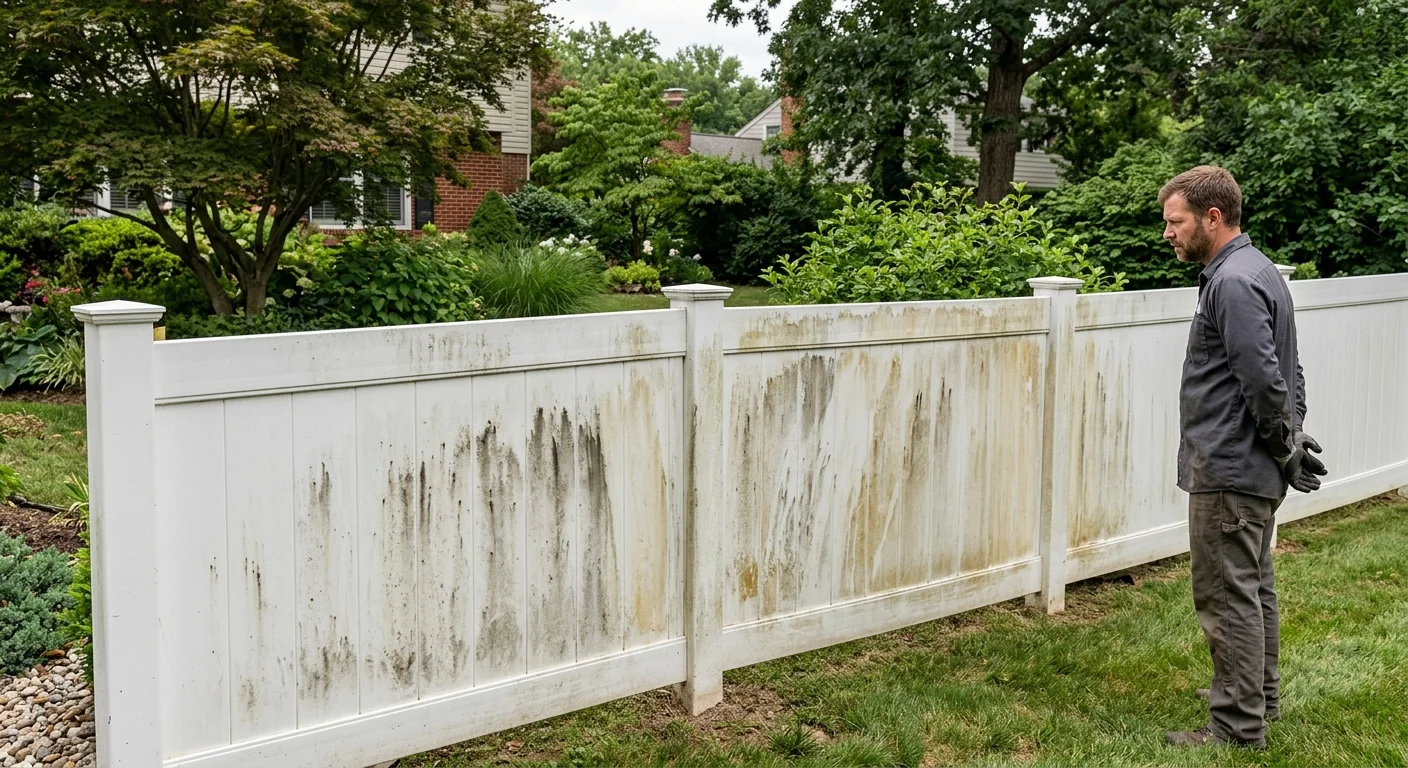
How fading, staining, and surface transfer can look different
Fading, staining, and transfer can sit on the same fence and still look nothing alike. A faded panel usually lightens in a broad field. The change often tracks the sun. West and south faces in Encinitas, La Jolla, and Coronado take long afternoon light. Inland east-facing runs in El Cajon, Santee, and Escondido take a harder hit after the marine layer burns off. That color shift tends to be even across a face. It does not look like a drip or a blotch.
Staining is patchy. It follows water, soil, or plant contact. A sprinkler arc leaves a fan of mineral film. Soil splash marks the bottom rail after winter rain in Mission Valley. Dusty Santa Ana winds do the same in Ramona and Lakeside. Fertilizer overspray can sit as spots under a hedge. Pool-deck wash-down can leave a tide line on the yard side of a privacy run. None of that proves one product or one chemical. It only tells the pro where to look next.
Surface transfer is a contact story. Rust blooms around screws, hinges, and gate hardware. A treated-wood neighbor fence can mark vinyl where the two meet. Bougainvillea, ivy, or a storage bin leaves a silhouette. Grill smoke on a Chula Vista patio can gray the inside face. The street side may stay closer to the original color. A faded vinyl fence and stained vinyl fence panels can share a lot line. They still need different notes in the file.
A vinyl fence turning yellow is a description, not a diagnosis. Yellow can track sun on one face. It can track irrigation minerals on another. It can be residue from a nearby material. Gray can be film, shade, or soot. Pink or rust tones often sit near metal. They can also sit near soil. The pro photographs both faces. They compare shaded posts to open panels. They resist naming a cause from one swatch.
If the pattern stops at a gate, a corner, or a later add-on panel, that matters. Batch differences happen. Later vinyl fence work can sit next to older runs without matching. That is a matching problem. It is not proof the first run failed.
What exposure, irrigation, and landscaping details need review
The lot around the fence does as much talking as the vinyl. A pro walks the sun path first. Which face gets afternoon light. Which stretch sits in the shadow of a two-story stucco wall in North Park or a garage in Oceanside. Reflected heat off light stucco and concrete can be as hard on a panel as open sky. Coastal north county lots in Encinitas and Carlsbad often mix salt air with a west-facing view. Inland north county lots in San Marcos, Vista, and Escondido mix heat with irrigation that runs on a timer whether anyone is watching the fence or not.
Irrigation is a regular source of marks. Heads that overshoot a planter will stripe the same boards every cycle. Drip lines that leak at a post leave a vertical stain. Mineral film is common inland, where water sits and dries in the sun. The pro notes head type, spray direction, and whether the wet line matches the discoloration. If the wet line and the color line don’t match, the water story is incomplete.
Landscaping details belong in the same walk. Mulch piled against the bottom rail. Grade that changed after a vinyl fence installation in San Diego and now buries the kickboard in soil. Vines tied to the pickets. A compost bin, a dog run, or a hose bib on one side only. South Bay yards in National City and Chula Vista sometimes squeeze a fence between a patio and a narrow side yard. One face cooks. The other stays damp. East County lots pick up more dust on the windward side.
The pro also notes nearby work that isn’t fencing. Fresh stucco, concrete, or roofing can leave splash. A neighbor’s finish can transfer at the property line. None of those details prove the vinyl itself changed. They keep the assessment honest. Skip the yard and only stare at the color, and you can pick a wash for a shade problem, or a panel swap for a sprinkler that still points at the new part.
Confirm what actually sits on your lot. City water, irrigation settings, and plant programs are not one county-wide rule. Ask the landscaper or look at the controller clock. The fence pro can map the wet pattern. They can’t guess your timer from the street.
Why panels, posts, caps, and hardware should be inspected together
A discolored panel is one piece of a system. Posts, rails, caps, and hardware age in the same weather. They often tell a clearer story than the board you noticed from the kitchen window. If panels have shifted color and the posts have not, the pro checks batch, cap shadow, and irrigation wash. If the posts have changed and the panels have not, the file should include a damaged vinyl fence post look. Color can sit next to cracks, lean, or a failed cap.
Caps matter. A missing or split cap lets debris and water sit in the post cavity. That can stain the top of the post and the top rail even when the mid-panel still looks closer to original. The pro inspects caps rather than wiping the face and calling the walk done. Rails get the same pass. Bottom rails collect soil splash. Mid-rails collect hose marks and plant rub. Top rails collect droppings and dust that bake in East County sun.
Hardware is part of the color map. Hinges, latches, decorative screws, and gate closers can rust or leach onto vinyl. A gate that drags can scuff a post and leave a dark track that looks like staining until you watch the swing. Coastal hardware in Imperial Beach, Coronado, and La Jolla lives in salt air. Inland hardware lives in heat and irrigation overspray. The pattern around fasteners should be photographed with the panel, not treated as a separate errand.
Look at both sides of the run, including the neighbor’s face when you have access. A shared line can show transfer from their wood, their plants, or their spray. California Civil Code §841 covers adjoining landowners when construction, maintenance, or necessary replacement of a dividing fence is on the table. Adjoining landowners are presumed to share equally in reasonable costs unless a written agreement says otherwise. A landowner must give 30 days’ written notice before incurring those shared costs. Confirm the current text with California Legislative Information. Color change by itself does not settle who pays.
The pro should also note later add-ons. A cap swap. A taller privacy bay. A repaired section after a storm. Mixed parts are common. They confuse anyone who expects one even color from end to end.
When cleaning, part matching, and replacement deserve separate scopes
Cleaning, part matching, and replacement are different jobs. Bundling them into one vague “fix the color” request hides access, sequencing, and what success even looks like. A cleaning scope is about film you can see and feel: mineral crust, soil, organic residue, irrigation scale. A licensed fence contractor can say whether a wash is worth trying and which faces to test first. They should not promise the original color back. Maker guidance varies by product, and no single approved cleaner for San Diego County vinyl could be confirmed here. Ask the contractor to read the brand on your panels, then confirm approved care with the maker before anyone applies a product.
Part matching is a separate scope when a few bays are marked, cracked, or later additions. Vinyl colors and textures change across production runs. A new panel next to an older bay can look like a mismatch even when both are sold as the same catalog color. The pro measures, photographs in shade and sun, and tells you whether a close match is realistic. If it isn’t, the honest next talk is a larger replacement run, not a single board that will read as a patch from the street.
Replacement is its own scope when the vinyl is brittle, the posts are failing, the rails are open, or enough bays are off-color that a wash won’t read as even. That’s fence repair when the layout still has sound posts and a true line. It becomes new vinyl work when a full run is the cleaner result. California Business and Professions Code §7048 exempts contractor licensing when the aggregate contract for labor, materials, and all other items is less than $1,000, and the work is casual, minor, or inconsequential and does not need a building permit. Panel and post work often sits above that line once labor and materials are together. Confirm the current threshold in the statute, and check the contractor’s license on the CSLB site before you sign.
Keep the three scopes on separate lines in the proposal. Cleaning that fails shouldn’t silently become a full tear-out you didn’t agree to. Matching that can’t hit the old color shouldn’t be sold as a complete visual reset. Replacement shouldn’t include a chemical experiment on the parts you plan to keep. An independent contractor can sequence those pieces. Confirm current pricing with the contractor you hire. No wash or panel-swap figure is published here, because no verified market study supports one.
What photos help a fence pro document the pattern
Photos save a second visit and keep the file honest. Shoot the whole run from both ends, then from the yard and from the street if the street side is visible. Include a wide shot that shows the house, the sun angle, and neighboring materials. A close crop of one blotch with no context is almost useless.
Then shoot the pattern the way it actually sits. One panel in open sun. The same profile in shade. The bottom rail, the cap line, and any wet stripe from irrigation. Stand far enough back that a later viewer can tell left from right. If a vinyl fence turning yellow on the west face looks closer to original on the east face, both photos belong in the set. If stained vinyl fence panels sit only under a hedge, include the hedge.
Photograph hardware, gate swing marks, and the neighbor’s material at the meeting point. Photograph sprinkler heads and the wet line on a morning when the system has run. Note the date, the time, and whether the marine layer was in. Midday glare in La Jolla can hide a film that shows in overcast light in City Heights. Don’t diagnose in the caption. Label what you see: “west face, bay 4, under the orange tree,” not a cause.
A faded vinyl fence often looks worse in a phone photo taken at 2 p.m. than it does at 8 a.m. Send both. Include one photo of an unaffected bay on the same run if you have one. That comparison is what a fence pro uses to decide whether they’re looking at the whole product, one exposure, or one landscape contact. Keep people and license plates out of the frame. The goal is the pattern, not a tour of the property.
When to call us
Discoloration that shows up with cracked posts, loose rails, or a gate that no longer lines up is work for a licensed C-13 fencing contractor, not a weekend wipe-down. Fence Pros San Diego is a referral service. You contract with the independent professional directly. Verify the license at the CSLB license tool. Call us at (858) 400-4906 and we’ll connect you with a licensed fence contractor.