Santee sits inland in San Diego’s East County, and that location changes a fence here. Summers run hot and dry, lots get bigger toward the hills, and neighborhoods range from older streets with mixed fencing to newer tracts with HOA rulebooks. A fence that works near the coast can warp, fade, or fail faster out here.
Fence Pros San Diego is a referral service. We introduce homeowners to independent installers. We do not publish per-foot prices or pull City of Santee permits.
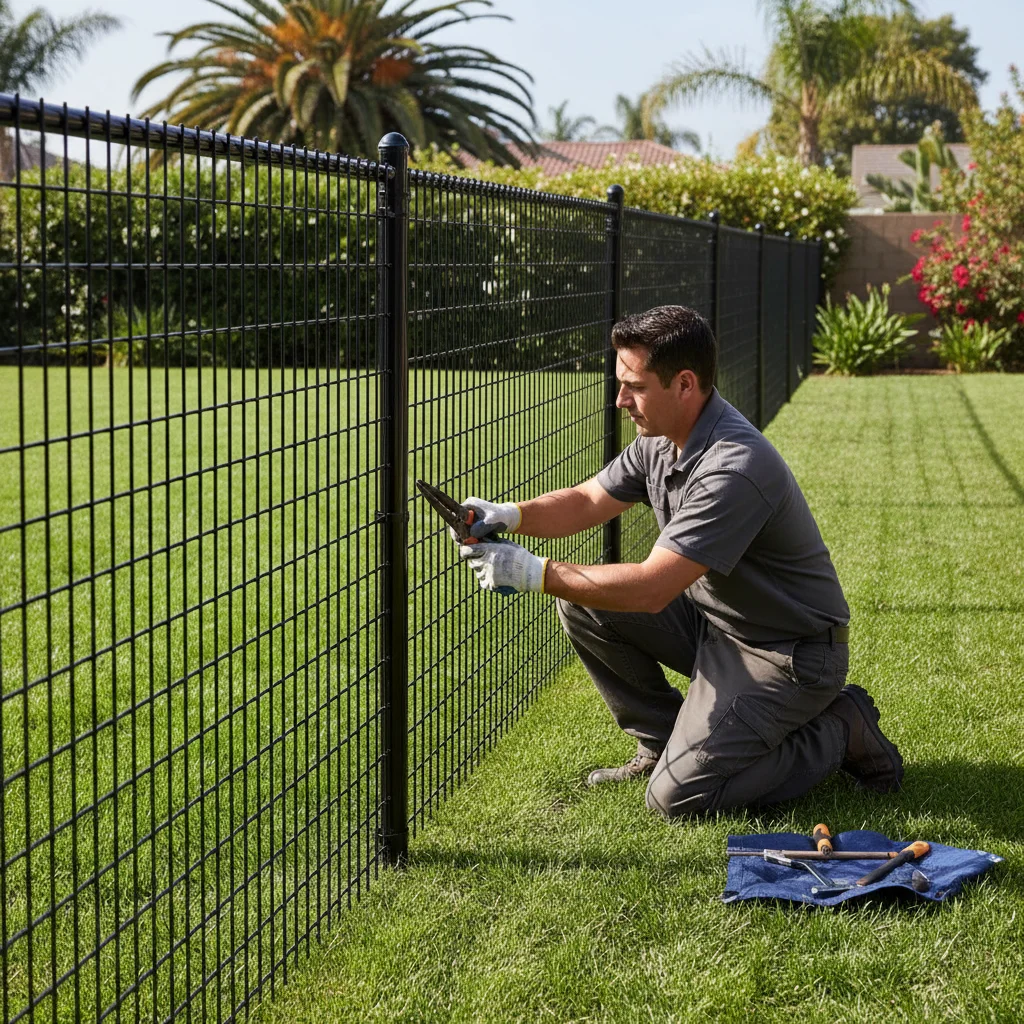
Best fence materials for Santee’s heat
The first thing fencing has to survive in Santee is sun and dry heat. Inland temperatures climb well past the coast, and the swing between hot afternoons and cool nights is hard on cheap material.
Cedar and redwood are the wood picks that belong in the conversation. Both resist warping and checking better than pine, and they hold a stain or seal coat that protects against UV. Budget pine dries out, splits, and starts leaning in this climate. If you want a wood fence, name the lumber grade in the bid. Best wood for a fence in San Diego breaks down the trade-offs.
Vinyl is the other strong option, and it shows up a lot in the newer tracts. Class-A or named UV-stabilized vinyl handles heat better than thin economy panels. It does not need sealing and does not feed termites. Ask any installer to confirm the product line before you sign. For a full walkthrough of options, see fence installation.
Fencing larger and rural-edge lots
Toward the edges of Santee, lots open up. Neighborhoods like Carlton Hills, Carlton Oaks, Sky Ranch, and Fanita carry bigger parcels, and some properties run rural with room for horses or livestock. Fencing those lots is a different job than wrapping a quarter-acre backyard.
On a larger lot, linear footage adds up quickly, so material class matters more than it does on a small yard. This is often where chain link fence earns its place: it encloses a lot of ground, does not block the inland breeze, and is a different bid class than privacy wood or vinyl. Plenty of Santee properties run chain link along the back and sides and save wood or vinyl for the street-facing front.
Horse and livestock properties on the rural edge need fencing built for animals: taller runs, no-climb mesh or pipe-and-wire, and posts sized for animal load. See horse property fencing in San Diego County. Hillside lots add another wrinkle. A fence stepping down a slope has to be laid out for the grade so it does not sag or leave gaps at the bottom. Ask how the contractor will step or rake the line before the first post.
New tracts and HOA rules vs older neighborhoods
Santee is two fence situations. Newer tracts often have HOAs that dictate material, height, color, and style. Pull the architectural guidelines before you fall in love with a design. Many of these communities standardize on vinyl or a specific wood style and stain, and they often require approval before work starts.
Older Santee neighborhoods are the opposite. No HOA, no standard, and decades of whatever each owner put up. That gives you freedom, and it also means matching a neighbor’s fence or splitting a shared property line is a conversation before you build. California Civil Code 841 sets a 30-day written-notice path and an equal-cost presumption for a dividing fence between private adjoining landowners unless a written agreement says otherwise.
HOA review and City of Santee permitting are separate. Knowing which situation you are in is the first question to answer.
What a fence costs in Santee
There is no supported Santee rate card. Chain link, cedar or redwood, and vinyl are different classes. Slope, hardpan, long rural runs, and old-fence removal push a bid around. Get two or three written quotes that name the same length, height, grade, post schedule, and demolition. Compare those lines. For a countywide bid-reading guide, see San Diego fence cost for 2026. Once you have a contractor’s quoted rate, the quote subtotal worksheet checks arithmetic. It does not invent a market price.
City of Santee permits
Santee is its own incorporated city. Fence rules come from the City of Santee, not the County.
City building-permit submittals go through the Santee Portal. The city states paper plans are no longer accepted. The city’s work-not-requiring-a-permit list includes fences not over 6 feet high measured from the bottom of the footing to the top of the fence, and it still tells you to verify location and height with Planning and Padre Dam. A permit exemption is not zoning approval.
The city’s residential-zone summary lists maximum fence or wall height of 3 1/2 feet in the front yard, or 6 feet if the upper portion is open and non-view obscuring, with the top portion 90 percent open when taller than 3 1/2 feet for visibility and corner clearance. Side, rear, and exterior street side yards are summarized at 6 feet. Outdoor recreation-court fencing is listed separately at 12 feet in side, rear, and exterior side yards. Confirm parcel zoning and Title 13 before treating that table as the last word.
Front-yard and corner lots still have sight-triangle questions. Pool fences carry state enclosure rules on top of city code. For the broader county picture, San Diego fence permit guide.
Choosing a fence company in Santee
Look for an installer who talks about inland heat, inland soil, and Santee Portal submittal without you having to ask. Always verify the license yourself at cslb.ca.gov. Ask for a written estimate that spells out material grade, height, footage, post depth, demolition if any, and timeline. Warranty language belongs in the contractor’s contract, not as a promise from this referral site.
Frequently asked questions
What’s the best fence material for Santee’s heat?
Cedar or redwood for wood, and a named UV-stabilized vinyl if you want to skip stain cycles. Both hold up to dry inland sun better than budget pine or thin economy vinyl.
Do I need a permit for a fence in Santee?
Often the city’s 6-foot measured-from-footing list is the starting point, plus Planning and Padre Dam for location. Front-yard, corner, pool, retaining-wall, and slope work can still need more review. Check the Santee Portal and Planning for your parcel.
How much does a fence cost in Santee?
There is no honest per-foot band on this page. Ask for itemized bids and use the quote subtotal worksheet after you have a contractor’s numbers.
Can I fence a horse or livestock property near Santee’s edges?
Yes, if the layout and the city allow it. Rural-edge neighborhoods like Sky Ranch and Fanita support that conversation, but animal fencing needs the right height, mesh or pipe-and-wire, and posts. Our horse property guide covers the details.
When to call us
If you are planning a fence in Santee, call (858) 400-4906. We can introduce you to a licensed independent company. Confirm heat-tough specs, HOA documents, and City of Santee rules with that contractor. You can also see the Santee fence service page.