Fence removal in San Diego is priced after someone sees the run: material, how the posts are set, access to the street, and whether anything is going back up. Fence Pros San Diego is a referral service. We do not publish per-foot demo rates, dump fees, or junk-hauler truck menus.
If a new fence is going in the same line, ask every installer to break out demo and haul as a line inside the replacement bid. Paying for standalone removal only makes sense when nothing is going back up.
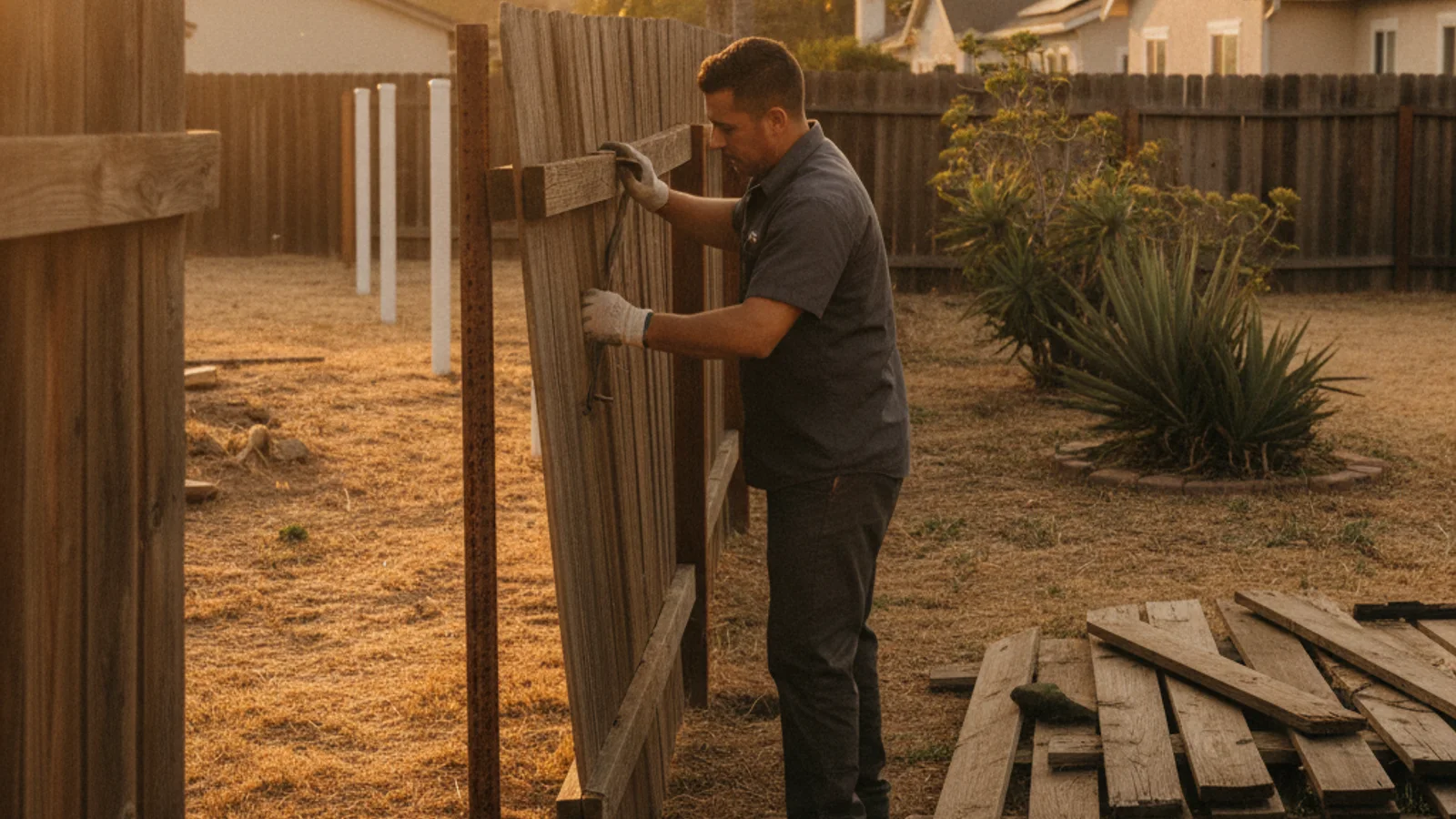
What fence removal costs by material
The price tracks how heavy the fence is and how hard it fights back. Chain link comes down fast because the fabric unclips and rolls up. Wrought iron takes cutting, and every section is heavy. Use the table as a difficulty ranking, not a rate card.
| Fence material | What usually takes the time | Why bids move |
|---|---|---|
| Chain link | Posts, not the fabric | Fabric rolls; concrete footings still matter |
| Wood | Weight and disposal class | Panels come apart; treated lumber is debris, not green waste |
| Vinyl | Volume in the truck | Light, but panels do not compact well |
| Wrought iron or aluminum | Cutting and lift | Heavy, welded or bolted |
Two extras sit on top of length. Posts set in concrete take much longer than posts in soil, because the footing has to be dug around, broken, or lifted out. Disposal is charged by the hauler or landfill, usually by weight or truck volume. A heavy wet wood fence or a pile of concrete footings dumps differently than the same length of vinyl. We will not invent a percent of job for dump fees.
Pressure-treated lumber cannot go in the green organics bin and should not be burned. Confirm current construction-debris rules with the hauler. Termite-damaged wood still hauls as debris. Damage does not discount disposal. If you are weighing whether that damaged fence is worth saving, repairing versus replacing a termite-damaged wood fence.
The cheapest way to remove a fence: bundle it with the new one
If a new fence is going up where the old one stands, do not price removal as its own project first. Get it quoted as a line inside the replacement bid. When a fence contractor is already mobilizing people, a truck, and a dump run for your install, tearing out the old fence is incremental work on a job they are doing anyway. That is why the demo line on a replacement bid is often much smaller than a standalone tear-out, and some installers fold it in to win the job. Ask them to write the number so you can see it.
If replacement is on the table, start with the 2026 San Diego fence cost guide, then make every bidder break out demo and haul. Once you have a quoted demo figure, you can enter it as an “other” line on the quote subtotal worksheet. That worksheet does not invent a market rate.
Junk-removal companies have a real place when the fence is already down and stacked. They price by truck volume, not by the trade work of dismantling. They are haulers, not fence crews. Concrete-set posts tend to stay in the ground or blow up the quote. Compare a fence contractor’s standalone removal against a hauler only when the panels are already on the ground.
So the decision looks like this. Fence coming down and a new one going up: bundle it. Fence coming down permanently: hire a fence contractor or other licensed labor for standing demo. Fence already in a pile: a junk hauler’s truck pricing may be the simpler call.
What drives fence removal cost up
Length sets the base. The jobs that blow past estimates almost always trip on one of these.
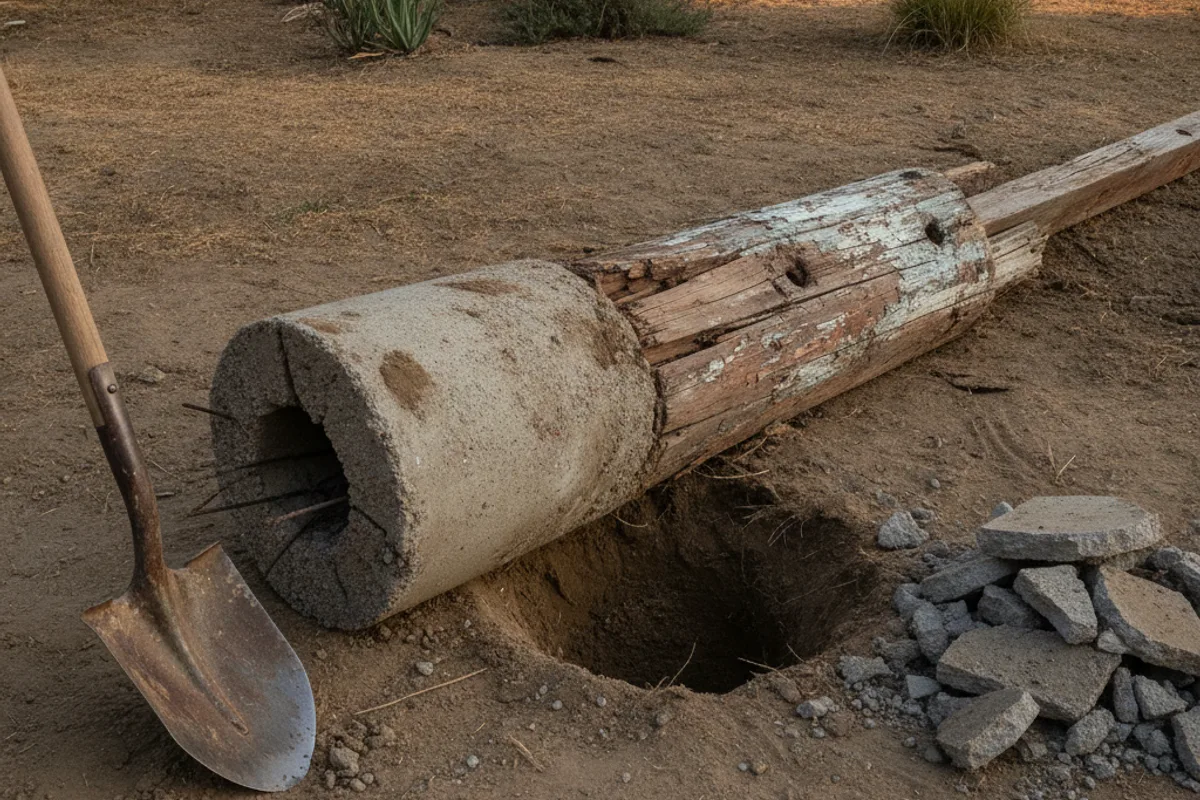
Concrete footings. A post in soil pulls faster. A post in a footing has to be dug, rocked, and lifted, or the concrete gets broken in the hole. Count the posts. On a long run that is most of the labor.
Slope and access. A flat lot with gate access to the street is the easy case. A fence down a canyon slope in Del Cerro, or a backyard you can only reach through the house, means every panel and chunk of concrete is carried out by hand.
Corroded fasteners near the coast. Salt air rusts screws, brackets, and tension bands until they snap or strip. Crews end up cutting hardware that should have unscrewed. An Ocean Beach fence often takes longer to dismantle than the same fence in Santee.
Shared fences and the neighbor. Do not assume removal is permit-free everywhere. Ask the city or County for the parcel. Coronado’s March 2025 handout, for example, requires a building permit for demolition or reconstruction of any fence greater than two feet. That is Coronado only. If the fence sits on the property line, California Civil Code 841 treats adjoining private landowners as sharing responsibility for a dividing fence unless a written agreement says otherwise. Give 30 days’ prior written notice with the problem, proposed solution, cost sharing, and timeline before you incur costs. Removing a boundary fence without notice is how small projects turn into disputes.
Partial removal. Sometimes only a section needs to come out. Small scopes often carry a minimum trip. If most of the fence is sound, check whether repair beats replacement. Common fence repairs in San Diego explains how to read a repair bid without a rate card.
How to get an accurate removal quote
Measure the fence, count the posts, and note whether the posts are set in concrete. Take a photo of the fence line and one of the access path to the street. A bidder who can see the canyon slope or the side-gate squeeze quotes it more accurately.
Then get the removal priced two ways: standalone, and as a line inside a replacement bid. The gap between those two numbers is usually the biggest saving on the project.
We connect you with independent fence repair and fence installation contractors who can quote demo and haul. They quote after seeing the run. Call (858) 400-4906 and tell us the fence length, the material, and whether something is going back up.
Frequently asked questions
How much does it cost to remove a fence in San Diego?
There is no supported per-foot band on this page. Material, concrete footings, access, and disposal set the bid. Get it in writing.
Is fence removal free with a new fence installation?
Often it is cheaper as a line inside the replacement bid than as a standalone tear-out, because the truck and dump run are already on the job. Always ask bidders to break out the demo line. “Free” only counts if the contract says so.
How much does it cost to remove a chain link fence?
Chain link is usually the easiest standing fence to take down because the fabric rolls. Posts, especially in concrete, are where the time goes. There is no honest per-foot number here.
Do I need a permit to remove a fence in San Diego?
Ask the city or County for the parcel. Rules differ. Coronado requires a permit for demolition or reconstruction of fences greater than two feet per its March 2025 handout. That does not apply countywide. For a shared boundary fence, Civil Code 841 still requires written notice before you incur costs, even when building paper is not the issue.
Can I put old fence wood in the green bin?
No for pressure-treated fence lumber. It is construction debris, not organics. Confirm current landfill or transfer-station rules with the hauler. Do not invent a dump fee from this article.